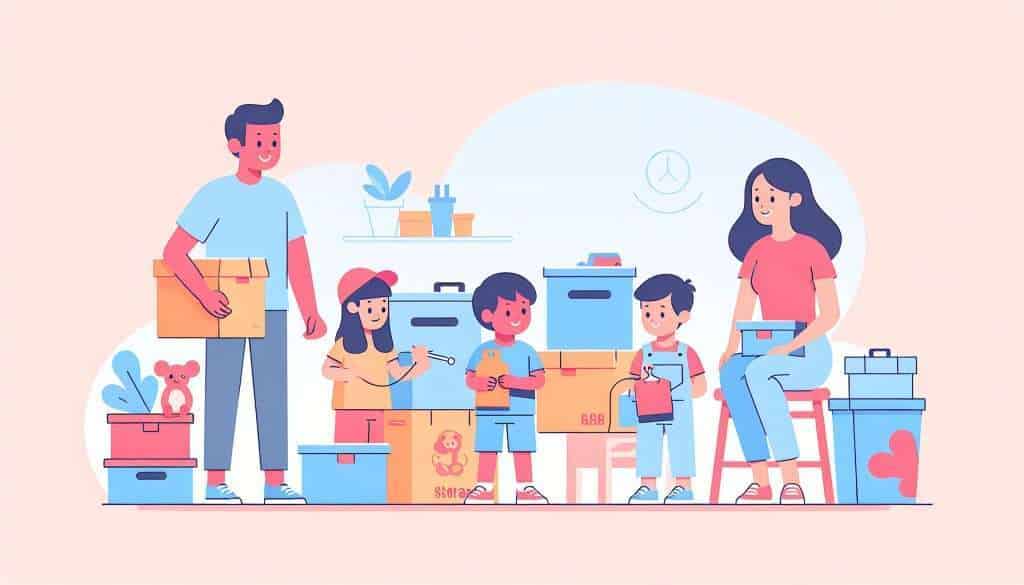
Why bother decluttering (yes, even with kids)
If you’re reading this mid-staple attack on the living room floor, I get you. Decluttering sounds like a luxury when you’re referee, snack chef, and bedtime song coordinator. But a few targeted edits to what you own can buy you time, calm, and fewer toys in hairbrushes.

Confession: sometimes we skip the ‘perfect’ AI images and just can’t resist picking the most awkward ones. Hopefully they bring a smile to your face too!
Also try: Decluttering with Kids: A Playful Parent’s Guide
We’ll talk about realistic things to declutter — not a total life overhaul. Think more ‘small wins’ than ‘garage-sale-everything’.
- This guide covers: quick wins that reduce daily friction
- Room-by-room things to declutter (toys, clothes, school paper, more)
- How to get kids involved without meltdowns
- Donation, recycle, trash decisions and simple routines
Quick wins: things to declutter today
Start where you can see the payoff. These are small, visible edits that immediately improve how your home feels and functions.
- Counter clutter: mail, flyers, pens — pick one landing spot and sort daily.
- The ‘one-year rule’ closet purge: if it didn’t get worn last year, (out).
- Toy triage: remove duplicates and broken toys into donate/trash piles.
- Under-sink purges: expired meds and bottles are non-negotiable departures.
Room-by-room: specific things to declutter
Kids’ bedrooms and play areas
Kids’ spaces are the obvious place to prune — and also the most emotional. Focus on function, not nostalgia, and involve the kiddo where it makes sense.
- Stuffed animals: keep favorites, donate the rest — take a photo of the rest before they go.
- Toys with missing pieces: toss or repurpose into art projects.
- Art output: keep one portfolio per school year and photograph the rest.
- Puzzles & games: if pieces are missing, retire or use as parts for new play.
Closets and clothing
Clothes multiply. Fast. Use lockers for seasonal clothes and be ruthless about outgrown items.
- Outgrown clothes: donate immediately after outgrowing to avoid regret piles.
- Duplicate basics: keep one or two spares, not a small boutique’s inventory.
- Stained or holey items: repair if sentimental, otherwise recycle.
Kitchen and pantry
A crowded kitchen slows meal time and increases waste. Small edits save grocery budget and sanity.
- Expired food and odd single-serve packs: toss or compost.
- Gadgets used once: regretful air-fryers? Keep only what you actually use weekly.
- Random lids and mismatched containers: pair them, donate extras.
Paper, digital, and sentimental clutter
Paper piles breed quickly. Digital mess is quieter but just as stressful. Sentimental items are the trickiest because they carry feelings. Handle each with practical rules.
School papers and mail
Set a simple system: action, archive, or recycle. Limit the archive pile.
- Keep only schoolwork that shows milestones, one binder per child per year.
- Scan certificates and art to a cloud folder, then toss originals if you’re short on space.
- Junk mail: insta-recycle with a ‘deal with mail’ basket at the entry.
Phones, tablets, and files
Digital decluttering saves time and mental load. It’s also embarrassingly satisfying to see your desktop under 20 files.
- Unsubscribe from emails in batches using the built-in link or a single unsubscribe sweep.
- Delete screenshots and duplicate photos monthly.
- Organize financial documents into one folder; shred physical copies you don’t need.
The ‘Four-Box’ step-by-step method
A simple process beats endless decision paralysis. Grab four boxes: Keep, Donate, Recycle/Trash, Unsure.
- Step 1: Pick a 20–30 minute session and one zone (desk, toy shelf, pantry shelf).
- Step 2: Touch each item once and place it in a box.
- Step 3: Immediately bag donate items and schedule drop-off or pick-up within a week.
- Step 4: Revisit ‘Unsure’ in 30 days — if you didn’t miss it, let it go.
This process makes decisions faster and prevents ‘maybe’ from becoming permanent clutter.
How to involve kids (without bribery… much)
Kids help when it’s a game, a choice, or a teachable moment. Full-on negotiation is optional.
- Offer choices: ‘Pick three toys to keep on the top shelf.’
- Make decluttering a mission: set a timer for 10 minutes and play upbeat music.
- Use icons or labels for younger kids so they know where things belong.
For sentimental items, let kids pick their favorites and take photos of others. You’ll get fewer tantrums and more meaningful keepsakes.
Donation and disposal: where to send things
Donating feels good and extends life for many items. Some things need special handling.
- Good condition toys/clothes: local shelters, consignment, or community swaps.
- Electronics: recycle through certified e-waste programs.
- Medications and hazardous materials: follow local pharmacy or city guidelines.
Label donation bags with the intended drop-off so they don’t creep back into the closet ‘for now.’
Keep it going: simple routines that stick
Maintenance beats marathon clean-ups. Small, regular actions keep things from ballooning back into chaos.
- Ten-minute nightly reset: dishes, one hanging coat, five toys.
- Monthly closet checks before laundry day.
- Quarterly ‘donate bag’ review to prevent stockpiling.
Put these actions on a family calendar and treat them like non-negotiable chores — for five people, not one.
Final pep talk (because you can do this)
Decluttering doesn’t require an all-or-nothing personality. A focused 30 minutes today changes tomorrow’s morning rush. Pick one drawer, one shelf, or one box and do it.
And remember: fewer things doesn’t mean less love. It means the things you keep get noticed, used, and appreciated more.
FAQs
What are the easiest things to declutter first in a busy family home?
Start with visible, high-traffic areas: counters (mail and random papers), entryway shoes and jackets, and a toy basket purge. Quick wins reduce daily friction and build momentum.
How do I declutter my kids’ toys without causing a meltdown?
Use choice and limits: let your child pick favorites, turn it into a timed game, keep a small rotation box, and photograph items before donating. Give advance notice for donation so it feels fair.
Which things should I definitely not keep when decluttering?
Toxic or expired items (meds, old cleaning products), broken toys with safety risks, and clothing with irreparable damage. For sentimental items, keep a small curated selection or digital photos instead.
How often should a family declutter to keep clutter from returning?
A short 10-minute nightly reset combined with a monthly sweep (clothes, shoes, paper) and a seasonal review (donate extras) keeps clutter manageable without major time investment.