

If your house looks like a cheerful cyclone of blocks, books, and misplaced socks, welcome to the parenting club. Decluttering with Kids doesn’t have to be a guilt trip or a tactical eviction of every beloved plush toy. It can be a teaching moment, a game, and yes — a path to a calmer home.
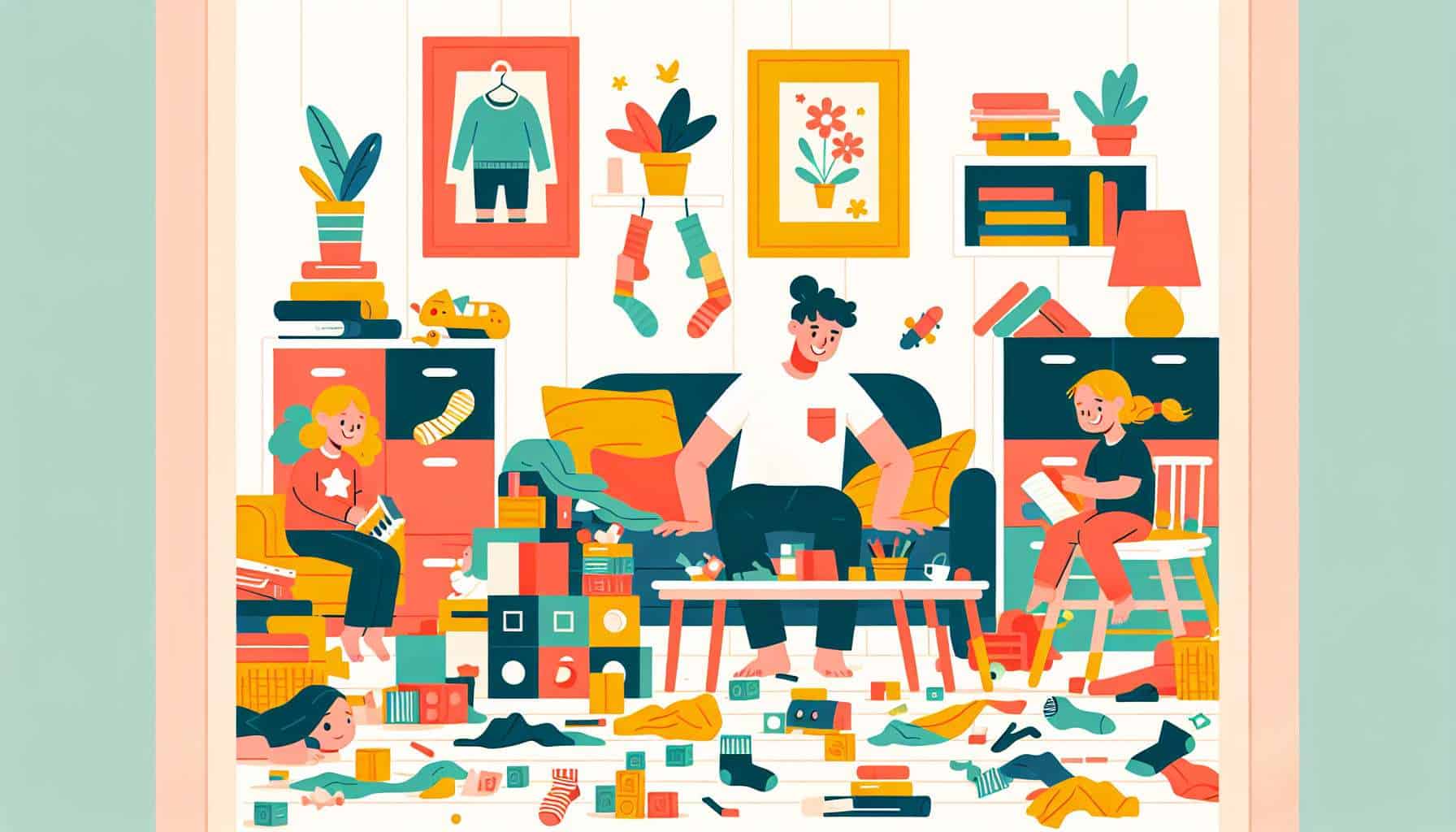
Confession: sometimes we skip the ‘perfect’ AI images and just can’t resist picking the most awkward ones. Hopefully they bring a smile to your face too!
- This guide covers…
- Quick wins to reclaim floors and sanity
- A step-by-step decluttering session you can do in 30–45 minutes
- Storage ideas, age-by-age tips, and how to handle tough attachments
Why Decluttering with Kids Matters (Beyond a Pretty Shelf)
Sure, tidy rooms photograph better for the grandparents, but the real wins are deeper. When you involve children in organizing and decluttering, they learn decision-making, empathy (what to donate), and responsibility.
Decluttering children’s bedrooms reduces visual overstimulation, speeds up clean-up time, and makes play more creative — because kids actually notice and use toys they can find.
Behavioral wins you can expect
- Fewer tantrums over ‘I can’t find it!’
- Shorter clean-up routines (win for parents and kids)
- Better sharing skills when donating toys
Quick Wins: Low-Hassle Decluttering with Kids
You don’t need a weekend or a label-maker to make a dent. Here are five quick wins that feel doable between snacks and school drop-off.
- The 10-minute toy sweep: set a timer, everyone puts 10 items into a bin. Sort later.
- One-shelf rule: pick one shelf to tidy; everything else stays put.
- Donate box by the door: anything that hasn’t been played with in 3 months goes in.
- Visible limits: use a small bin for stuffed animals so new ones mean old ones leave.
Each quick win is a small habit you can repeat. Small habits beat heroic weekend purges any day — especially with kids who will lovingly “redecorate” your hard work within minutes.
A Step-by-Step Decluttering Session (Fun, Fast, Repeatable)
Plan for 30–45 minutes. Invite the kids as co-captains. Use timers, music, and a ridiculous theme if you must (pirate ship rescue mission works wonders). Here’s a step-by-step you can follow.
- Prep: 3 labeled bins — Keep, Donate/Share, Toss. Add a fourth Maybe box for tough calls.
- Kickoff: Explain the rules in one sentence. Example: ‘We’ll pick what we love, what we share, and what we toss.’
- Sort round 1 (15–20 minutes): Work in zones — one shelf, one bin of toys, or one drawer.
- Decision rules: if a toy is broken, missing parts, or hasn’t been played with in months, consider donate/toss.
- Celebrate: quick victory dance, sticker, or a special snack when done.
Use gentle language. ‘We’re making space for new adventures’ sounds better than ‘You have too much stuff.’ Keep choices limited so kids aren’t overwhelmed.
Age-specific variations
Kids of different ages need different cues. Here are practical tweaks by age so Decluttering with Kids feels age-appropriate.
- Toddlers: Make it a game — ‘Find all the yellow toys!’ Use picture labels on bins.
- Elementary: Offer choices — keep three action figures, donate two. Use a timer for turns.
- Tweens/Teens: Respect privacy. Offer to help box things for storage. Suggest a ‘try-out’ donation where items are stored for 30 days before leaving.
Storage, Labeling, and Kids’ Room Organization Tips
Good storage is forgiving. Kids don’t fold; they toss. So plan for that. Clear bins, open baskets, and low shelves are your friends.
- Use clear bins or photo labels so kids can find contents.
- Low shelves for frequently used toys; high shelves for special items.
- Rotate toys: keep a few toys accessible and store the rest; swap monthly.
- Designate a ‘hot spot’ for backpack, shoes, and important school things.
Labeling can be quirky — stickers, doodles, or a tiny photo taped to the bin. If the label makes sense to your child, it’s doing its job.
Dealing with Resistance and Attachment
Emotional attachment is real. Your job isn’t to snatch toys; it’s to guide decisions and validate feelings. Expect negotiation, nostalgia, and occasional crocodile tears.
- Offer control: let the child pick one item to keep each time you donate.
- Make donating special: take photos of items ‘saying goodbye’ and share the story.
- Use the 3-month rule gently: ‘If it hasn’t been used in three months, maybe someone else would love it.’
For really tough attachments, try a trial storage box. Box the item, date it, and revisit in 30 days. If it hasn’t been retrieved, it’s easier to let go.
Making Decluttering with Kids Stick: Routines and Rewards
The difference between a tidy house and the return to chaos is a routine — short, consistent, and minimally naggy. Keep it simple.
- Five-minute tidy at bedtime: everyone does a quick sweep.
- Weekly swap day: rotate and refresh toys in a designated box.
- Monthly donate check: involve kids in choosing items to pass along.
- Celebrate wins: small rewards (stickers, extra story) for consistent cleanups.
Make the routine part of family life. When tidying is expected and short, kids are more likely to participate without drama.
Examples & Variations: Real-Life Scenarios
Scenario 1: You have 20 stuffed animals on the bed. Turn decluttering into ‘Stuffie Hotel.’ Each stuffie needs a passport (a small sticker). Only stuffies with passports stay overnight on the bed; others check into the hotel (donation box).
Scenario 2: The Lego avalanche. Dump all bricks on a sheet. Sort by color for 10 minutes. Create ‘build stations’ with small boxes for active sets and a donation bucket for mismatched or tiny pieces.
Scenario 3: The endless book pile. Implement a ‘shelf-or-share’ rule: if a book hasn’t been read twice in a season, it can be swapped for a library outing or donation.
Final Pep Talk: You Are Not a Storage Unit
Parent life includes a surprising amount of packing, unpacking, and pretending nothing exploded. Decluttering with Kids doesn’t need to be perfect — it needs to be doable and teachful. Aim for progress, not perfection.
Start small, celebrate often, and keep the tone playful. Your future self (and your toes) will thank you.
FAQs
How do I start Decluttering with Kids when my child refuses to part with anything?
Start by giving choices and control. Offer a small, time-limited trial (box items for 30 days), use a donate story, and set a tiny, achievable task (one shelf or 10 minutes). Praise effort, not just results.
What are easy decluttering rules for young kids?
Use simple rules: ‘One toy in, one toy out,’ ‘If it’s broken, toss it,’ or ‘Keep three special toys on the shelf.’ Visual bins and short timers make rules sticky and fun.
How can I teach my child to keep their room tidy long-term?
Build short routines: a five-minute nightly tidy, a weekly swap box, and visible storage. Involve kids in decisions, and reward consistency with small privileges or family recognition.
Is it okay to secretly declutter my child’s things?
Occasionally clearing obvious trash or broken items is fine, but habitually removing toys without discussion can damage trust. Aim to involve kids in decisions or use the trial-box method for sensitive items.

