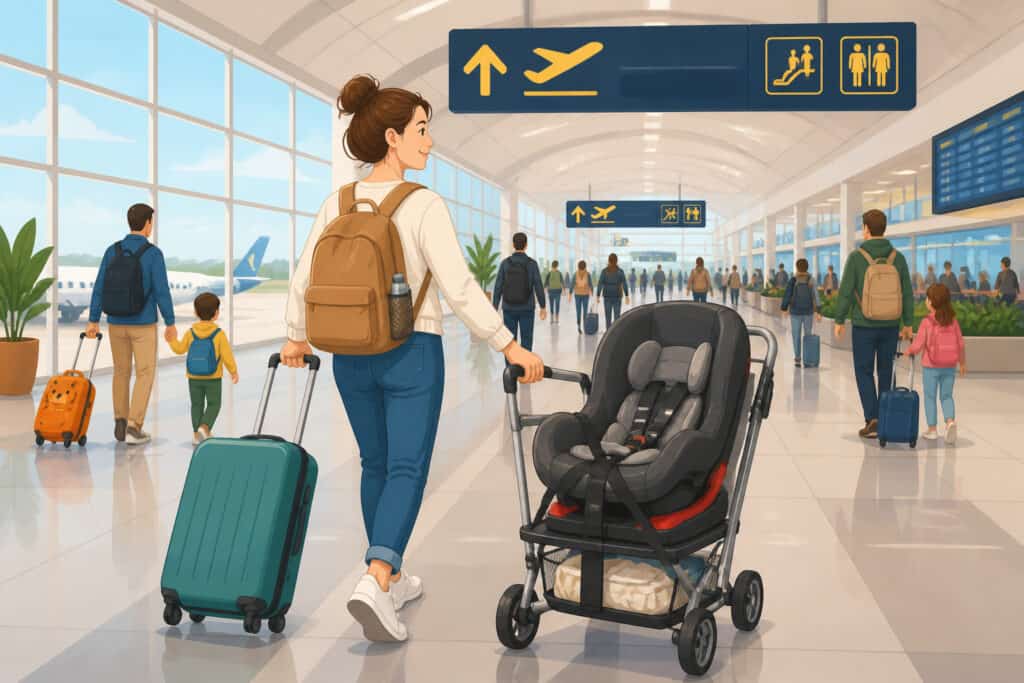
Why choose sustainable travel with kids?
Yes, you could slap the kids in a hotel, hand over a tablet, and call it a vacation. Or you could pick trips that teach values, cost less, and protect the places you visit. Sustainable Travel with Kids is less about heroics and more about small decisions that add up.
Confession: sometimes we skip the ‘perfect’ AI images and just can’t resist picking the most awkward ones. Hopefully they bring a smile to your face too!
Also try: Traveling to Japan with Kids: A Parent’s Playbook
You get quieter beaches, fewer guilt pangs, and kids who learn early that choices matter. Plus, many green options are cheaper, simpler, and more fun than you expect.
- This guide covers: planning greener trips, smart packing, low-impact activities, on-the-road habits, and real-life checklists
Planning a low-impact family trip
Sustainable family travel starts at the planning stage. Decisions you make before you leave affect emissions, costs, and how meaningful the trip will be for your kids.
Choose closer destinations
You do not need to fly across the planet to have an adventure. Weekend road trips, regional train rides, and local nature reserves are often richer experiences for little attention spans.
- Prioritize destinations reachable by train or car to cut flight emissions
- Explore national parks, coastal towns, and community festivals within a few hours’ drive
- Mix a longer trip every few years with lots of nearby mini-adventures in between
Pick family-friendly low-carbon transport
If flying is unavoidable, offset responsibly, pack light, and choose direct flights. If you can, opt for trains or ferries — they can be part of the fun.
- Train travel: more legroom, fewer security lines, and educational scenery for kids
- Car travel: plan stops for active breaks and rotate driving to avoid burnout
- Buses and ferries: budget-friendly and often scenic alternatives
Smart packing for eco-friendly families
Packing well reduces waste, avoids last-minute purchases, and makes transitions smoother. Think reusable, durable, and kid-proof.
Zero-waste packing checklist
- Reusable water bottles for each family member
- Cloth snack bags and beeswax wraps instead of single-use plastic
- Travel cutlery set and a collapsible bowl or cup
- Mini first-aid kit and a small laundry soap bar for quick washing
- Compact reusable wipes and biodegradable sunscreen
Make a capsule wardrobe for kids: mix-and-match pieces in layers. Less lost luggage, fewer outfit choices to fuss over, and less laundry in the long run.
Pack-for-reuse tips that kids can do
- Let kids choose a reusable water bottle and a snack container — ownership reduces waste
- Label items with a fun sticker so they are less likely to be left behind
- Teach simple chores: packing their own dirty-clothes bag or folding a shirt
Activities that teach and delight
Travel is the best classroom. Sustainable Travel with Kids means picking activities that connect them to nature, culture, and community.
Low-impact activity ideas
- Guided nature walks that emphasize observation over collection
- Community-led experiences like local market visits or craft workshops
- Beach or park clean-ups that turn a chore into a family game
- Biking tours and paddling trips, with safety-first instruction for kids
Frame activities as opportunities to learn. Ask kids what sounds they hear, what plants they see, or what questions they’d like to ask a local artisan.
On the road: habits that stick
Small, consistent habits are what make sustainable travel realistic, not extreme. These are tricks that work with kids, not against them.
- Carry a small waste bag and separate recyclables when possible
- Avoid single-use souvenirs; pick postcards, photos, or experiences
- Use local services and guides to support communities
- Teach the three R’s with the kids: reduce, reuse, respect
Don’t preach. Model. If you explain why you refill a water bottle or choose a family-run guesthouse, kids absorb the lesson far better than any lecture.
Real-life sample 3-day itinerary
A sample itinerary helps you see how sustainable choices fit naturally into a family trip. This example assumes a car or short train ride from home.
- Day 1: Morning train or drive to a nearby coastal town; afternoon beach exploration and an evening local meal at a family-run cafe
- Day 2: Guided nature walk in the morning; picnic with reusable containers; local craft workshop in the afternoon
- Day 3: Bike ride along a safe trail, community market visit, and slow return home with a stop at a roadside fruit stand
Practical swaps that save money and the planet
You do not need to be an eco-nerd to make smart swaps. Here are easy changes that have real impact and make family life simpler.
- Bring homemade snacks instead of airport food
- Rent gear like car seats or camping equipment near your destination
- Choose family rooms in small guesthouses rather than big resorts
- Use digital tickets and maps to cut paper clutter
Packing checklist you can copy
- Reusable bottles, snack bags, and utensils
- Lightweight washable clothes and one rainy layer per person
- Compact first-aid and small laundry kit
- Entertainment: a nature journal, a deck of cards, and a few surprise stickers
Final tips for keeping it real
Sustainable Travel with Kids is a practice, not a pass/fail test. Celebrate progress, not perfection. If you forget your reusable cup once, laugh, buy a reusable one on the trip, and move on.
The goal is to create memories and models for your kids: experiences that are rich, gentle on the planet, and affordable for your family.
FAQs
How do I start Sustainable Travel with Kids on a tight budget?
Start local: choose nearby destinations you can reach by car or train, pack homemade snacks to avoid inflight expenses, and pick community-run guesthouses. Small changes like reusable bottles and renting gear locally cut costs and waste.
What are easy eco-friendly activities suitable for young children?
Choose sensory, low-impact activities: guided nature walks, beach combing (no collecting live creatures), bike rides on safe trails, and local craft workshops. Turn clean-ups into a game to make them fun and memorable.
Can sustainable travel still be fun for kids who love gadgets?
Yes. Use gadgets strategically: download nature apps that identify birds or plants, create a photo scavenger hunt, or let kids document the trip with a phone camera. Blend low-tech and high-tech to keep the experience lively.
How do I teach sustainability without sounding preachy on vacation?
Model the behavior and explain choices briefly. Turn actions into questions and games: ask kids which reusable item they prefer, or challenge them to pack the lightest bag. Make learning playful and hands-on.