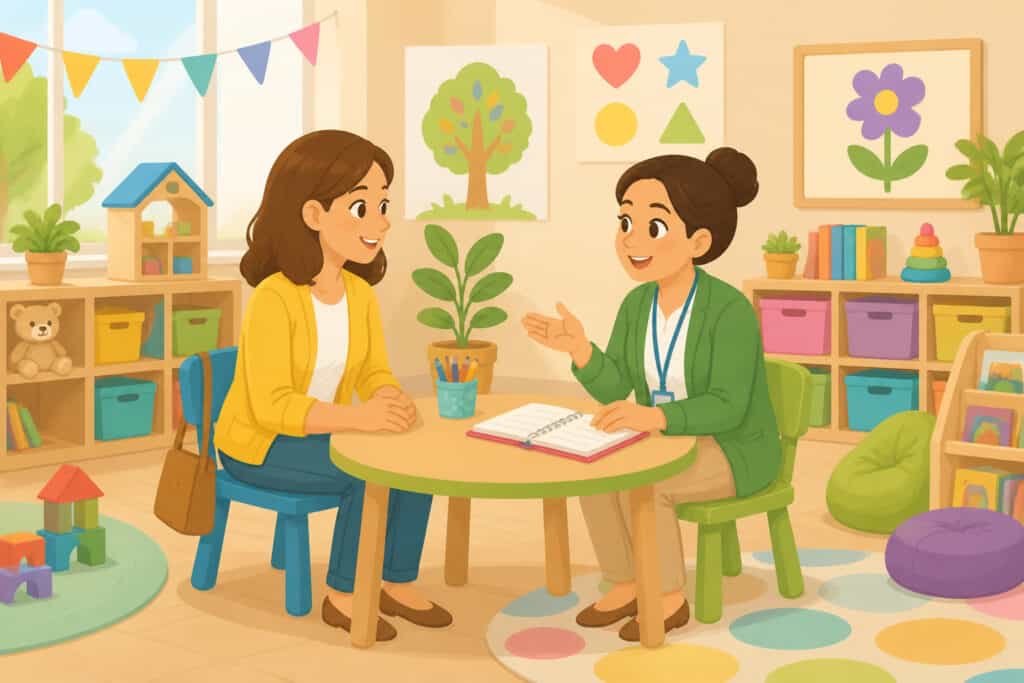
If the goal of childhood is to graduate with a diploma in life skills, then resilience is the core course. Building Resilience in Children doesn’t mean making them invincible — it means helping them learn to bend, recover, and keep growing when life hands them lemons, or the occasional scraped knee.
Confession: sometimes we skip the ‘perfect’ AI images and just can’t resist picking the most awkward ones. Hopefully they bring a smile to your face too!
Also try: Sibling Rivalry Solutions: A Parent’s Playbook
You don’t need a degree in psychology to do this. You need curiosity, consistency, and a few playful tools in your parenting kit. Think of this as practical coaching with a wink, not a lecture.
This guide covers…
- What resilience really looks like (spoiler: it’s messy)
- Daily habits and scripts you can use with toddlers through tweens
- Concrete steps for parents when setbacks happen
What is resilience (and why care?)
Resilience is less about toughing things out and more about learning to respond. It’s a set of skills: emotional regulation, problem-solving, persistence, and social support. When we focus on building resilience in children, we aren’t creating little stoics; we’re teaching adaptable humans.
Resilient kids are more likely to try again after failure, ask for help when needed, and manage big emotions without spiraling. Those are life-ready skills that translate to school, friendships, and later, the workplace.
The foundation: safe, predictable relationships
You can teach every strategy in the world, but if a child doesn’t feel secure, those lessons won’t stick. The easiest, highest-return investment is a consistent, warm relationship. That means you show up, listen, and respond reliably.
Small, repeated behaviors build that sense of safety: bedtime routines, check-ins after school, and predictable responses to big feelings. Consistency doesn’t equal rigidity; it equals trust.
Daily habits that build resilience
Habits turn good intentions into practice. Below are simple, everyday moves that teach kids they can handle challenges.
1. Label feelings (and don’t fear them)
When kids hear words for emotions, they gain control. A two-year-old who can point at “angry” or “sad” is more likely to use words than fists five minutes later.
- Use short phrases: “You look frustrated—do you want to tell me what happened?”
- Offer a feeling chart for little ones — let it be playful and silly.
- Model your own emotions out loud: “I’m annoyed my coffee spilled. I’ll take a deep breath.”
2. Teach problem-solving as a celebration, not a test
When children face a snag, guide them through options rather than fixing it immediately. That builds a muscle called agency — the sense that their actions matter.
- Ask: “What could you try next?”
- Offer two doable choices if your child freezes: “Do you want to draw a plan or practice once?”
- Celebrate the attempt, not just the win: “You tried — that was brave.”
3. Build mini-mastery moments
Break big skills into tiny wins. Tying laces, doing a math problem, or making a snack can be scaffolded so kids experience success repeatedly.
- Create a small challenge with clear steps and praise progress.
- Rotate chores that are slightly harder each week.
- Use timers for independent play to build stamina.
Routines, rituals, and resilience recipes
Routines aren’t boring—they’re anchors. A few rituals we love: a ‘rose and thorn’ dinner check-in (best part, worst part), a brief post-error celebration (“You learned something!”), and a predictable calming routine for bedtime.
Parents often underestimate the power of ritual. It signals to a child: even when the day is chaotic, here are things that are safe and yours.
Sample 10-minute resilience toolkit (daily)
- Evening 2-minute check-in: name one win, one hard moment.
- Breathing game: four-count in, hold, four-count out — make it a silly face.
- One independence practice: let them choose outfit or prep snack.
When setbacks happen: a five-step script
You will want to swoop in. Resist. Instead, use this quick five-step script that signals support while teaching resilience skills.
- Pause: breathe and get down to their level.
- Reflect: “I see you’re upset. Tell me what happened.”
- Validate: “That would make me upset too.”
- Problem-solve: “What are two things we could try?”
- Debrief later: “What helped? What next time?”
This script can be adjusted for ages. For preschoolers, use more simple language and play. For tweens, ask more open questions and offer tools rather than solutions.
Teaching persistence without pressure
Persistence is different from perfectionism. We want kids to keep trying, not to feel crushed when they don’t succeed immediately. Praise effort, strategy, and progress — not innate talent.
- Say: “You worked so hard on that strategy.”
- Share your ‘I tried and failed’ stories (age-appropriate and genuine).
- Normalize stepping away: sometimes persistence includes sensible breaks.
Social resilience: friendships and team skills
Friendships are practice fields for resilience: negotiation, disappointment, repair. Teach kids simple repair scripts: “I’m sorry I snapped. Can we try again?” Role-play these in low-stakes moments so they’re ready when emotions run high.
Encourage group activities where roles rotate so children experience both leadership and following. That balance teaches flexibility and empathy.
Age-friendly examples (quick wins by stage)
Toddlers (1–3 years)
Name feelings, offer choices, and establish calming corners. Keep expectations tiny: independent spoon practice, putting one toy away.
Preschool–Early Elementary (3–7 years)
Introduce simple problem-solving steps and play-based role-plays. Celebrate attempts loudly and sometimes ridiculously — kids love over-the-top praise.
Tweens (8–12 years)
Practice reflective questions and collaborative problem-solving. Encourage micro-challenges: make a small project with a deadline, track progress, and troubleshoot setbacks together.
When to get extra support
Most resilience-building happens at home, but sometimes kids need more help. Reach out to teachers, pediatricians, or a child therapist if a child:
- Avoids activities they once loved for months
- Has intense, out-of-control reactions frequently
- Shows changes in sleeping or eating outside of expected patterns
Asking for help models resilience too. It’s one of the bravest lessons you can teach.
Final thoughts and playful challenges
Building Resilience in Children is a long, lovely mess. It’s less about never falling and more about laughing, learning, and getting up with cleaner knees and a better plan.
Try this: pick one habit from this guide for two weeks. Make it silly. Report back — I’ll imagine you high-fiving your kid for trying something new.
FAQs
What are simple ways to start building resilience in children at home?
Start with consistent routines, name emotions, and teach one problem-solving step at a time. Small daily habits — a two-minute check-in, offering choices, and celebrating effort — add up quickly.
How can I teach my child to handle failure without becoming anxious?
Model calm responses to your own setbacks, praise effort and strategy rather than success, and create safe chances to fail (low-stakes challenges). Normalize taking breaks and revising plans.
When should I seek professional help for my child’s resilience or coping skills?
Talk to a pediatrician, teacher, or therapist if your child avoids activities they used to enjoy, has frequent extreme reactions, or shows sleep/appetite changes. Early support can prevent longer struggles.
Can games and play really help with building resilience in children?
Absolutely. Play teaches negotiation, coping, and trying again in a low-pressure way. Role-play repair scripts, use feeling charades, and turn breathing exercises into goofy challenges to build skills.
How do I encourage persistence without promoting perfectionism?
Focus on process: praise effort, planning, and problem-solving. Share your own messy attempts and emphasize learning over winning. Encourage breaks and reflect on what strategies helped.