

Meet Shadow Sprint: a playground game similar to hide and seek
If your kids love hide-and-seek but also enjoy running around and tagging people (because of course they do), Shadow Sprint is the perfect compromise. It combines the thrill of evading discovery with the quick bursts of sprinting that burn off extra energy before dinner. Think of it as hide and seek meets tag, with a few clever rules to keep things fair and fun.
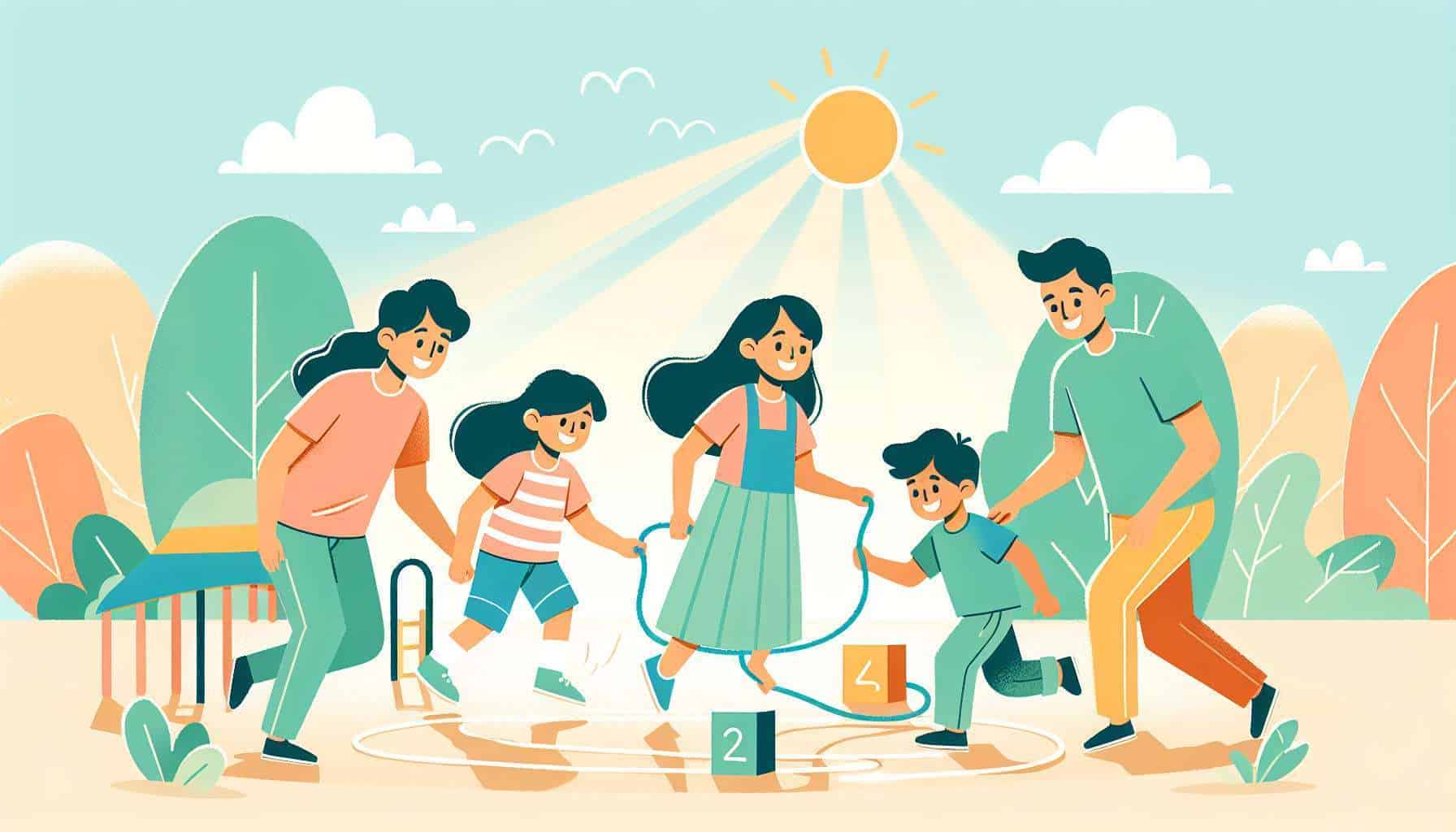
Confession: sometimes we skip the ‘perfect’ AI images and just can’t resist picking the most awkward ones. Hopefully they bring a smile to your face too!
Also try: Outside Games for Families: Fun, Easy Ideas
- This guide covers the basic rules, setup, age adaptations, safety tips, fun variations, and ways parents can referee without becoming that looming grown-up
Playground game similar to hide and seek? Yep—this one gives you the sneaky-search joy plus active chase. It’s easy to teach, scales to big or small groups, and plays well on playgrounds, parks, backyards, or gym classes.
Why kids (and exhausted parents) will love Shadow Sprint
Short bursts of running, quick thinking, and teamwork make this game irresistible. It uses hiding spots but keeps play visible enough that frustrated finders don’t wander off.
It also reduces the classic hide-and-seek problem: the one kid who hides in a corner for 20 minutes while everyone else gets bored. Shadow Sprint keeps everyone engaged, because hiding is only half the fun.
Materials and setup (read: almost nothing)
Exactly the kind of game you want: no special equipment, minimal rules, maximum chaos in a controlled way.
- Location: A playground or park with distinct play structures and safe open areas.
- Players: 4–12 works best, but you can scale up.
- Boundary markers: benches, bushes, a fence, or a line of cones if you’re being impressively organized.
- Timer or phone (optional) for timed rounds.
Basic rules — quick and sticky
Shadow Sprint is played in rounds. Each round has one Seeker and everyone else as Sprinters. The Seeker counts at a ‘base’ while the Sprinters hide or spread out. But here’s the twist: Sprinters must keep moving between hiding spots and can be tagged to be ‘caught.’
- Choose a Seeker by rock-paper-scissors, volunteer, or shame-free rotation.
- Seeker counts slowly to 20 at base while Sprinters scatter. No leaving the play area.
- On ‘go’, Seeker tries to spot Sprinters. When a Sprinter is seen, they can sprint to base to ‘score’ if they reach it without being tagged.
- If Seeker tags a Sprinter before they reach base, that Sprinter becomes ‘caught’ and waits out the round at a safe spot.
- Round ends when Seeker tags a set number (e.g., 3) or a timer runs out. Rotate Seeker.
The play-to-base mechanic keeps hiding short and encourages movement, so the energy stays high. It’s a playground game similar to hide and seek in spirit, but shorter, faster, and with a lot less sulking.
Step-by-step: how to teach it in under five minutes
You have a group of squirming kids and ten minutes before someone needs to pee. Here’s how to set it up on the fly.
- Set boundaries and a base. Make them super clear: ‘Don’t go past the green fence; base is the big tree.’
- Pick a Seeker. Let them count loudly at base to 20 (or 30 for older kids).
- Sprinters scatter; tell them they must stay visible and move every 10 seconds (helps with fairness).
- Seeker shouts ‘Ready? Go!’ and tries to spot Sprinters.
- If a Sprinter is spotted, they must sprint to base to score. Seeker tries to tag en route.
- Rotate and add mini-variations to keep rounds interesting.
Variations to try (age-adaptable and sanity-saving)
The basic format is flexible. Here are variations that suit preschoolers up through tweens.
- Silent Sneak: Sprinters must freeze when Seeker looks in their direction; movement only when Seeker turns away (adds stealth skills).
- Team Sprint: Split into teams. Teams score points when a member reaches base; first team to X points wins.
- Base Relay: Sprinter tags a teammate at base who then scores—great for cooperative play.
- Time Attack: Seeker has to tag as many as possible in 60 seconds; good for faster rotations.
- Invisible Line: Add a safe zone where Sprinters can’t be tagged for 3 seconds—helps little ones.
Safety first: running, parks, and basic common sense
Yes, kids will run. That’s the point. Do a quick safety check before beginning. Scan the area for tripping hazards, glass, or dangerously tempting climbing zones.
- Set clear boundaries and a ‘no-go’ climb zone.
- Make tagging gentle—no lunges to tackle.
- Remind kids to be aware of the equipment and other park users.
- Hydration breaks. Every five rounds is a reasonable recommendation unless your kids are literal deserts.
Adapting for ages and abilities
One of the best things about this playground game similar to hide and seek is how easy it is to adapt. A few tweaks make it fair whether you have four-year-olds or nine-year-olds.
For preschoolers: use shorter counting, closer boundaries, and a larger safe zone. For older kids: increase the count, add stealth rules, or turn it into a points-based competition.
For kids with mobility needs: allow rolling races to base, or choose tagging by tap on shoulder rather than sprinting. The idea is inclusion, not exclusion.
Keeping it fresh: themes, small rewards, and classroom-friendly tweaks
Add a pirate theme (base is the ship), animal names for Seekers, or missions like ‘collect three leaves before returning to base.’ Small rewards—high-fives, stickers, or letting the winner pick the next game—keep motivation high.
For teachers: turn rounds into short circuits between subjects. A five-minute game break every 30 minutes of class keeps attention sharper during lessons.
Troubleshooting common playground problems
If someone hides forever: remind Sprinters they must stay visible and move regularly. If Seeker gets overwhelmed by large groups: use team play or time-limited seeker turns.
If kids argue about tags: establish clear tag rules—open-handed touch only—and have one adult or older kid act as tie-breaker.
Why this playground game works better than plain old hide-and-seek right now
Short rounds, visible play, and the sprint-to-base mechanic keep boredom and frustration at bay. It trains quick decision-making, encourages sharing of hiding strategies, and gets everyone moving.
If your child loves a playground game similar to hide and seek but needs something with more action (and fewer tears), Shadow Sprint is your new go-to.
FAQs
What ages is this playground game similar to hide and seek good for?
Works for ages 4–12 with tweaks: shorter counts and bigger safe zones for littles; longer counts and stealth rules for older kids. Adapt tagging methods for mobility needs.
How many players do you need to play Shadow Sprint?
Minimum 4 players is ideal (one Seeker, three Sprinters), but the game scales up well to larger groups by using teams or rotating more quickly.
Can this hide-and-seek alternative be played in a classroom or gym?
Yes. Use cones for boundaries, reduce sprint distances, and switch to a slower ‘walk to base’ version for indoor safety. Time-limited rounds keep it classroom-friendly.
How do I handle safety and disagreements during the game?
Set rules upfront: gentle tags only, no climbing, clear boundaries, and a single adult or older child as referee. Short rounds and quick rotations reduce arguments.

