Why outdoor play matters at three
At three, your child is done just watching the world happen. Legs are stronger, balance is steadier, and the urge to run, climb, dig, and chase something, anything, grows by the week. Outdoor play gives all of that energy somewhere useful to go. It builds coordination, works new muscles, and gives everyone in the house a little more room to breathe.
Also try: Outdoor Activities for Four Year Olds once your child is ready for slightly more independent play.
Three is an in-between age. Kids this age have more control than a toddler but a shorter attention span than a five or six year old, so the activities that work best are quick to set up, easy to restart, and forgiving when interest wanders after five minutes. Expect some parallel play too: three year olds are just starting to play alongside friends rather than only next to them, so simple turn-taking games are worth introducing now.
- Quick, low-prep activities you can start in the next five minutes
- Simple safety notes for this exact age and stage
- Ways to adjust for weather, energy levels, and short attention spans
Outdoor activities three year olds actually love
Bubble chase
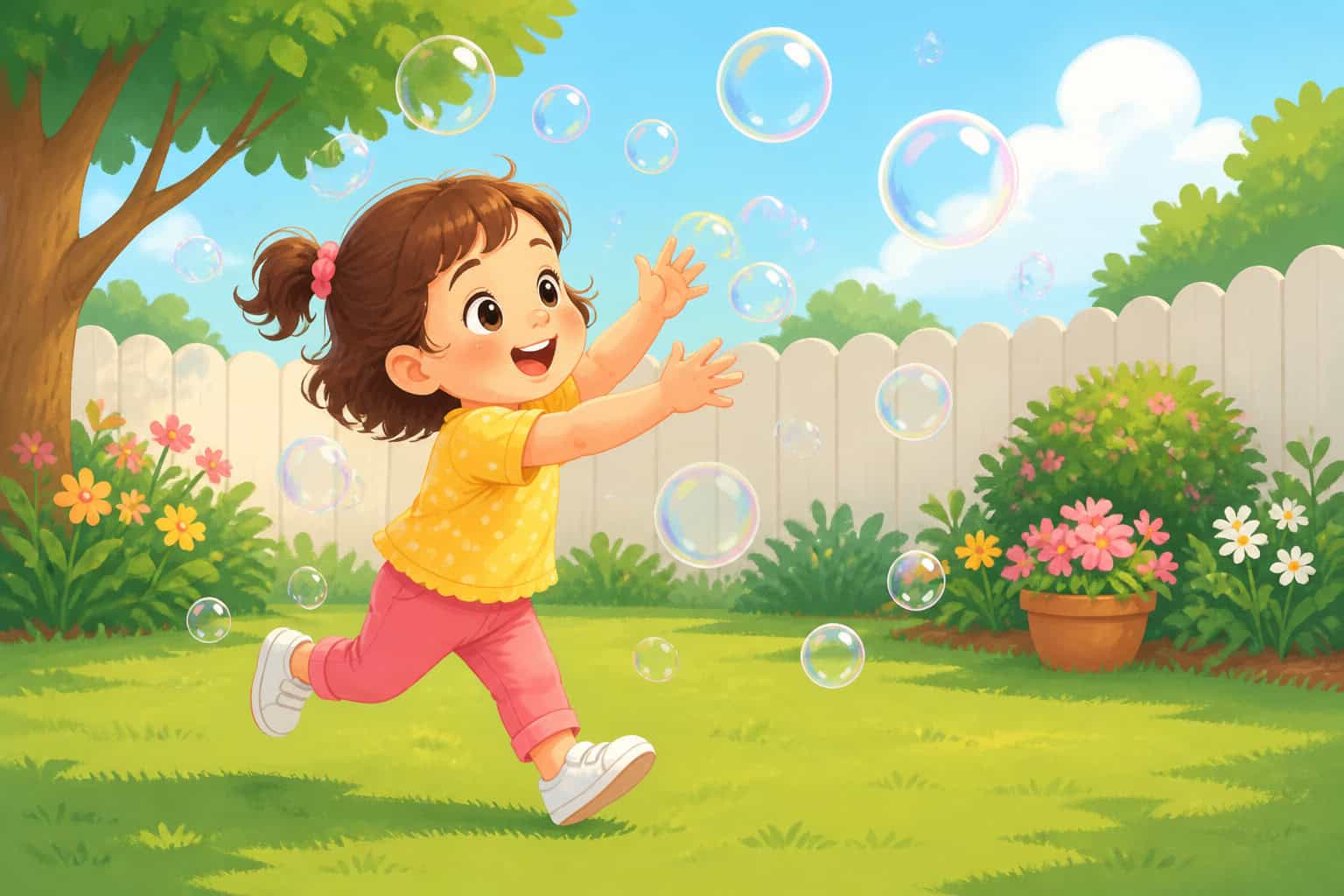
Bubbles are an easy win at this age. Chasing, popping, and blowing them with help works on gross motor skills and hand-eye coordination without any real setup.
- Use a big bubble wand for slower, easier-to-catch bubbles
- Turn it into a game: count how many pops happen before they land
- Let your child try blowing through a wand themselves, most three year olds can manage it with a little practice
Chalk scribbles and shapes
Sidewalk chalk is cheap, washes off with water, and gives early drawing skills somewhere to go. At three, most kids still hold chalk with a full-hand grip rather than their fingers, and that is completely normal.
- Draw big simple shapes for jumping practice: a circle, a square, a wiggly line to balance on
- Trace your child's foot or hand and let them decorate it
- Make a color scavenger hunt: find something outside that matches each chalk color
Backyard treasure basket walk
A short scavenger hunt gives a walk a purpose, which matters when a three year old's attention span is measured in minutes, not hours. Keep the list short: four or five items is plenty.
- Give a small basket or bag to collect finds
- Look for a leaf, a rock, a stick, and something soft
- Talk through each find together instead of rushing to the next one
As they get a little older and can follow a longer list, our Treasure Hunt Ideas for Kids guide has bigger hunts to grow into.
Balance beam with tape or a hose
Balance is one of the biggest physical leaps happening at this age. A line on the ground gives kids something concrete to practice on.
- Lay painter's tape, a garden hose, or a jump rope in a straight or curved line
- Walk heel to toe, then try walking backward once they have the hang of it
- Add 'cargo' to carry, like a stuffed animal, for an extra balance challenge
Animal walk relay
Turning basic movement into imaginative play keeps three year olds engaged longer than a plain instruction to run around.
- Hop like a bunny, waddle like a duck, stomp like a dinosaur
- Set a start and finish line with chalk or two toys
- Let your child pick the next animal, they will usually pick the silliest option available
Sand and water pouring station
Pouring, scooping, and dumping might look like simple play, but it is real hand-eye coordination and early measurement practice.
- Set out a shallow bin with cups, spoons, and a funnel if you have one
- Add a few floating toys for water play
- Keep it to a few inches of water and supervise the entire time
Big cardboard box play
A leftover box outdoors turns into a tunnel, a boat, or a hiding spot with almost no effort on your part.
- Cut a doorway or two for a simple tunnel
- Let your child decorate it with chalk or stickers first
- Flip it over for a low balance platform or a drum
Turning ordinary days into outdoor moments
You do not need a big activity plan every day. Small routines help a three year old know what to expect and settle into outdoor time faster.
- A five minute 'check the yard' walk before or after nap
- A small bin of outdoor-only toys kept by the door to skip setup time
- A regular spot, a tree, a step, a patch of grass, that becomes 'their' outside place
If the weather or the day calls for something quieter, our Quiet Games for Pre-Schoolers at a Picnic guide has calmer options that still count as outdoor time.
Weatherproofing play for this age
Rain
Puddles are basically free entertainment at three. Boots and a coat are the only real requirement.
- Puddle stomping and splash counting
- Floating leaves or twigs down a rain gutter stream
- A quick towel-off and dry socks waiting by the door
Heat
Move active play to morning or evening and keep breaks frequent. Three year olds overheat faster than older kids and will not always tell you.
- Shade, water, and sunscreen before you head out, not after
- A sprinkler or spray bottle for quick cool-downs
- Watch for flushed cheeks or sudden crankiness as an early sign it is time for a break
Cold
Cold weather just means shorter bursts of outdoor time with warmer layers.
- Layer with a warm middle layer and a windproof outer layer
- Mittens that are easy to put back on after they inevitably come off
- A warm drink waiting inside as the built-in signal that outdoor time is done
Safety and sanity-saving tips
At three, kids are fast, curious, and not yet reliable about stopping at the edge of a driveway or the top of a step. A few consistent rules do more good than constant reminders.
- Pick two or three simple rules and repeat them the same way every time, such as 'feet stay on the grass near the street'
- Stay within arm's reach near water, streets, or anything with a drop
- Keep sunscreen, a hat, and a change of clothes within easy reach
Packing checklist (quick)
- Water bottle and a small snack
- Spare clothes and a bag for anything wet or muddy
- Sunscreen, a hat, and a couple of bandaids
Wrapping up: keep it short, keep it simple
The best outdoor activities for three year olds ask for very little setup and leave lots of room for your child to lead. Some days that is a ten minute bubble chase. Other days a cardboard box turns into an hour long boat voyage. Both count.
Keep expectations loose, keep a few props on hand, and let curiosity do most of the work.
FAQs
How long can a 3 year old realistically play outside?
It varies by child, but many three year olds do well with 20 to 40 minutes of active outdoor play before needing a change of pace or a snack break. Splitting the day into two or three shorter outdoor stretches often works better than one long session.
What if my 3 year old doesn't want to share outdoor toys with other kids?
This is typical at three. Kids this age are still developing turn-taking skills, so bring a couple of duplicate items, like two buckets or two chalk sticks, when other children are around, and use simple language like 'your turn, then their turn' rather than expecting them to share on their own.
Are these activities safe for 3 year olds near water or sand?
Yes, with direct, within-arm's-reach supervision. Keep water play to a shallow bin or a few inches of water, and check sand areas for hazards before digging starts.
How do I keep a 3 year old engaged outside for more than a few minutes?
Rotate between a few short activities instead of expecting one to hold their attention the whole time. A five minute chalk session, a five minute bubble chase, and a short walk usually add up to more total outdoor time than pushing a single activity.
What gear actually helps with outdoor play at this age?
A small backpack with water, a snack, sunscreen, and a spare set of clothes covers most outings. Chalk, bubbles, and a bucket tend to be the most reused props at this age, and more elaborate gear often goes untouched.