So you decided to brave the great outdoors with small humans in tow. Brave, or reckless — same energy. Camping with Kids: Beginner Guide is here to help you survive (and actually enjoy) your first few nights under the stars. Think: less stress, more marshmallows, and a tent that actually stands up by morning.
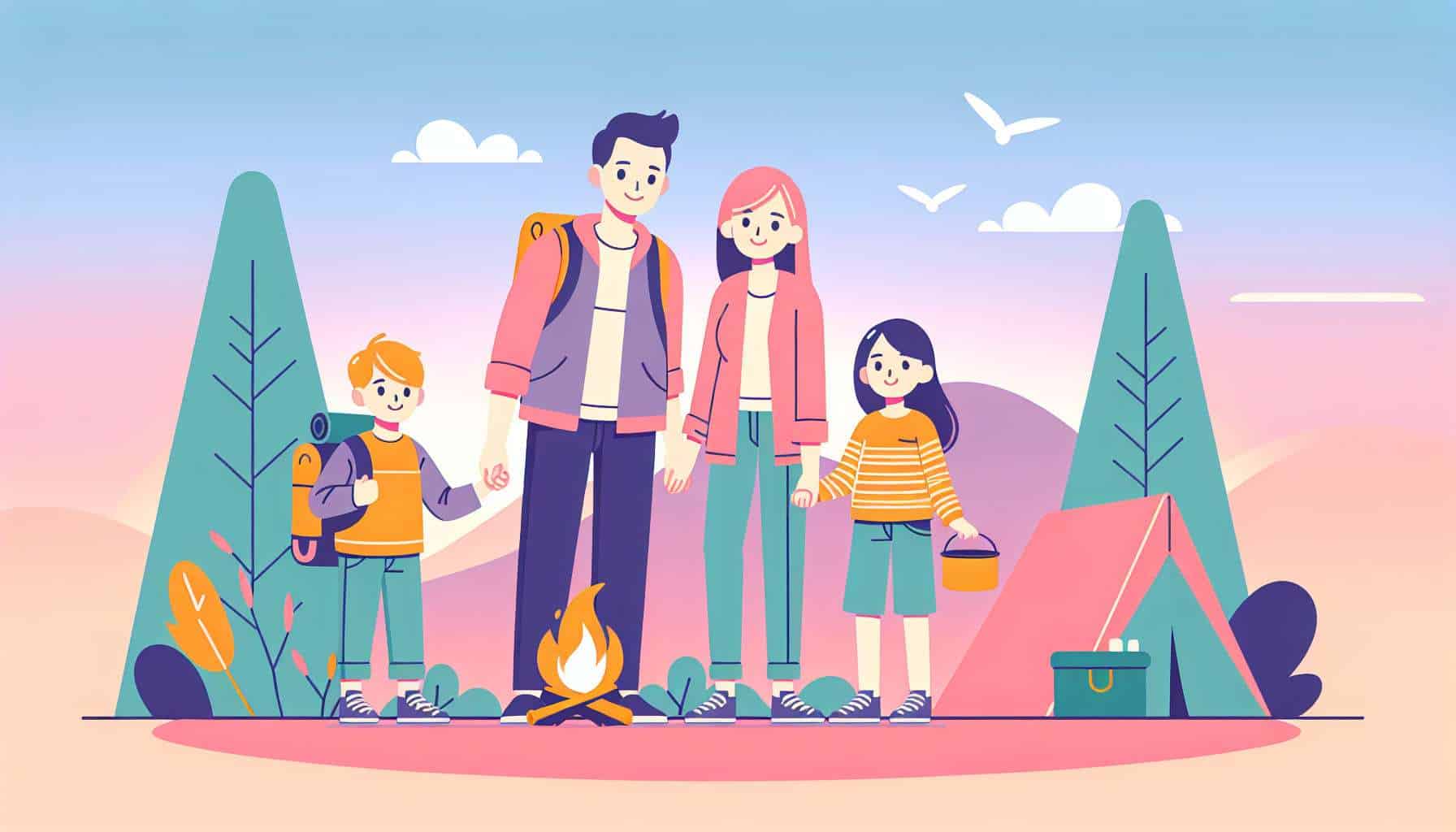
Confession: sometimes we skip the ‘perfect’ AI images and just can’t resist picking the most awkward ones. Hopefully they bring a smile to your face too!
Also try: Family Hiking Tips for Beginners: A Parent’s Guide
- This guide covers quick planning tips and realistic gear lists
- This guide covers simple meal ideas and bedtime survival strategies
- This guide covers safety, games, and troubleshooting common kid-camping problems
Before you go: Planning like a pro (or a very organized parent)
A little planning prevents a lot of whining. When camping with kids, assume everything will take longer, cost more snacks, and require more sunscreen than you think.
Pick a campsite that’s actually kid-friendly
Choose established campgrounds with flat sites, bathrooms, and short hikes. If your crew includes toddlers, proximity to the car is gold. For slightly older kids, a campsite near a lake or playground keeps energy in check.
- Bathrooms and potable water: non-negotiable for many parents
- Short, well-marked trails: so small legs can still call the hike a win
- Proximity to the car: makes middle-of-the-night diaper or pajama runs painless
Timing and trial runs
Start with one-night trips. Avoid peak season heat for toddlers or bugs. A backyard campout the week before can be a low-stakes rehearsal that reveals missing gear or bedtime problems.
Gear list — what you really need (and what you don’t)
Gear choices make a huge difference. You don’t need top-of-the-line equipment, but invest where safety and comfort matter. This section gives a compact, realistic list for camping with kids.
- Shelter: family tent with a simple setup (practice at home first)
- Sleeping: insulated sleeping pads + cozy sleeping bags sized for the child
- Cooking: small camp stove, fuel, lighter, basic cookware
- Lighting: headlamps for everyone, a lantern for the site, and glow sticks for kids
- First-aid + hygiene: full kit, sunscreen, bug spray, baby wipes
Tent setup: a step-by-step that won’t make you cry
Practice once at home. On site, do this in order: pick a flat spot, lay the footprint or tarp, assemble poles and attach tent, stake corners, and add the rainfly last. Keep kids entertained with a special ‘setup job’ (tossing in foam sleeping pads or handing stakes).
- Step 1: Choose flat ground, clear of sticks
- Step 2: Lay footprint, spread tent body, snap poles together
- Step 3: Insert poles, secure corners, stake tent
- Step 4: Add rainfly and guylines if wind is expected
Sleeping, naps, and the midnight routine
Kids need routine almost as much as they need snacks. Bring familiar sleep cues: a favorite blanket, storybook, or playlist. Expect an early morning wake-up call — but also epic stargazing if they’ll sit still for it.
Keep them warm and comfy
Layers are your friend. Even summer nights get chilly. Use a base layer, fleece, and sleeping bag rated for the expected low. For toddlers, a sleeping bag with a zip-off hood or a snug wearable blanket prevents cold feet and tent-scooting.
Food: simple meals that feel fancy at a campsite
Meal prep can be the easiest, most satisfying part of camping with kids. Aim for familiar favorites with one or two elevated elements (hello, foil-pack veggies). Keep snacks abundant and visible so kids graze instead of staging a meltdown.
Easy meal ideas and a basic camp cooking plan
- Breakfast: instant oats with dried fruit, toaster-style pancakes on a griddle
- Lunch: sandwiches, energy bites, fruit, and cheese
- Dinner: foil-pack meals (chicken + veggies), one-pot pasta, or burgers on the grill
- Dessert: s’mores variation — banana, chocolate, and oats for a healthier twist
Prep tips: chop veggies at home, pre-mix pancake batter in a squeeze bottle, and portion snacks into single-serve bags. Label everything — small hands will help themselves if the snack labeled ‘Eli’ exists.
Safety basics: common-sense rules that actually work
Safety doesn’t mean wrapping kids in bubble wrap. It means practical boundaries, teaching respect for nature, and predictable routines. When kids know the rules, they’re more likely to play along.
- Set the campsite boundary and use a visual cue (rope, lantern) so kids know limits
- Teach ‘stop and look’ before crossing trails or roads
- Keep a well-stocked first-aid kit and know where the nearest ranger or aid station is
Water safety and wildlife tips
If you’re near water, kids should wear life jackets unless they’re under constant, close supervision. Store food in sealed coolers and, if required, in bear boxes. Show children how to observe wildlife safely from a distance.
Games, activities, and boredom hacks
Keep a mix of active and calm activities. Nature is a built-in playground, but kids appreciate structured options too. Rotating a few special toys or a ‘camping treasure bag’ keeps the novelty alive.
- Scavenger hunts with photo tasks (rock shaped like a heart, red leaf)
- Simple crafts: pinecone bird feeders, leaf rubbings
- Night games: flash-light tag, constellation storytelling
Limit screen time but allow one small device for pictures or audiobooks — saved tears and parental sanity.
Troubleshooting: common kid-camping problems and fixes
Here are the usual suspects and quick fixes when camping with kids: tantrums, bug bites, sudden storms, and mysterious tent noises that are probably a raccoon.
- Tantrums: offer a quiet spot, a familiar snack, and a predictable activity like a story
- Bug bites: soothe with cool compresses and topical anti-itch; cover up at dusk
- Rain: have a tarp and quick-change clothes; make puddle-jumping a heroic activity to reframe the mood
Packing checklist: the no-forget essentials
Here’s a quick checklist to print or screenshot. You’ll thank yourself when you don’t have to run back to the car for that one missing thing.
- Tent, footprint, mallet, guylines
- Sleeping bags, pads, pillows, extra blankets
- Headlamps, lantern, extra batteries
- Cooking kit, fuel, matches, lighter, trash bags
- Clothing layers, rain gear, hats, sturdy shoes
- First-aid kit, prescriptions, sunscreen, bug spray
- Snacks, meal ingredients, resealable bags, cooler
Pack like you’ll be fine if one bag is soaked and another gets lost. Use dry bags for sleep gear and keep a ‘kids bin’ for favorite toys, books, and comfort items.
Final pep talk (you got this)
Expect messes, imperfect naps, and unforgettable sunsets. Camping with Kids: Beginner Guide is a starting point, not a rulebook. The bridge between ‘it’s chaotic’ and ‘that was amazing’ is planning, patience, and the ability to laugh when the s’more catches fire.
Go easy on yourself. The goal is connection and a few good stories to tell at family dinners. Leave time for unstructured play, keep snacks handy, and celebrate the tiny victories — like everyone being in the tent at bedtime.
FAQs
How do I start camping with kids if my children have never slept outside?
Begin with a backyard campout to test sleep setups, lighting, and routines. Move to a one-night campground trip next. Keep familiar bedtime objects (blanket, stuffed toy) and stick to a shortened version of your usual routine to ease the transition.
What’s the simplest meal plan for camping with kids?
Choose 2–3 simple meals and prep at home: overnight oats or instant pancake mix for breakfast, sandwiches and fruit for lunch, foil-pack dinners or one-pot pasta for dinner. Pack snacks in single-serve bags and have a sweet camp dessert like s’mores or grilled fruit.
How do I keep kids safe around water and wildlife while camping?
Set clear rules: life jackets near water, no swimming unsupervised, and a visible campsite boundary. Store food securely, teach kids to observe wildlife from a distance, and know the nearest ranger station or emergency number for your campground.
What gear is essential for a first family camping trip?
Essentials: a practiced tent, warm sleeping bags and pads, headlamps for everyone, a basic cooking kit and fuel, first-aid kit, sunscreen, bug spray, and easy-to-eat snacks. For toddlers, a portable potty or easy access to bathrooms is extremely helpful.