Why Simple Home Workouts for Families?
Between school runs, snack negotiations, and the endless laundry vortex, finding time for exercise feels like planning a sitcom heist. Simple home workouts for families are the reality-friendly solution: short, flexible, and built to include every family member from toddlers to teens.
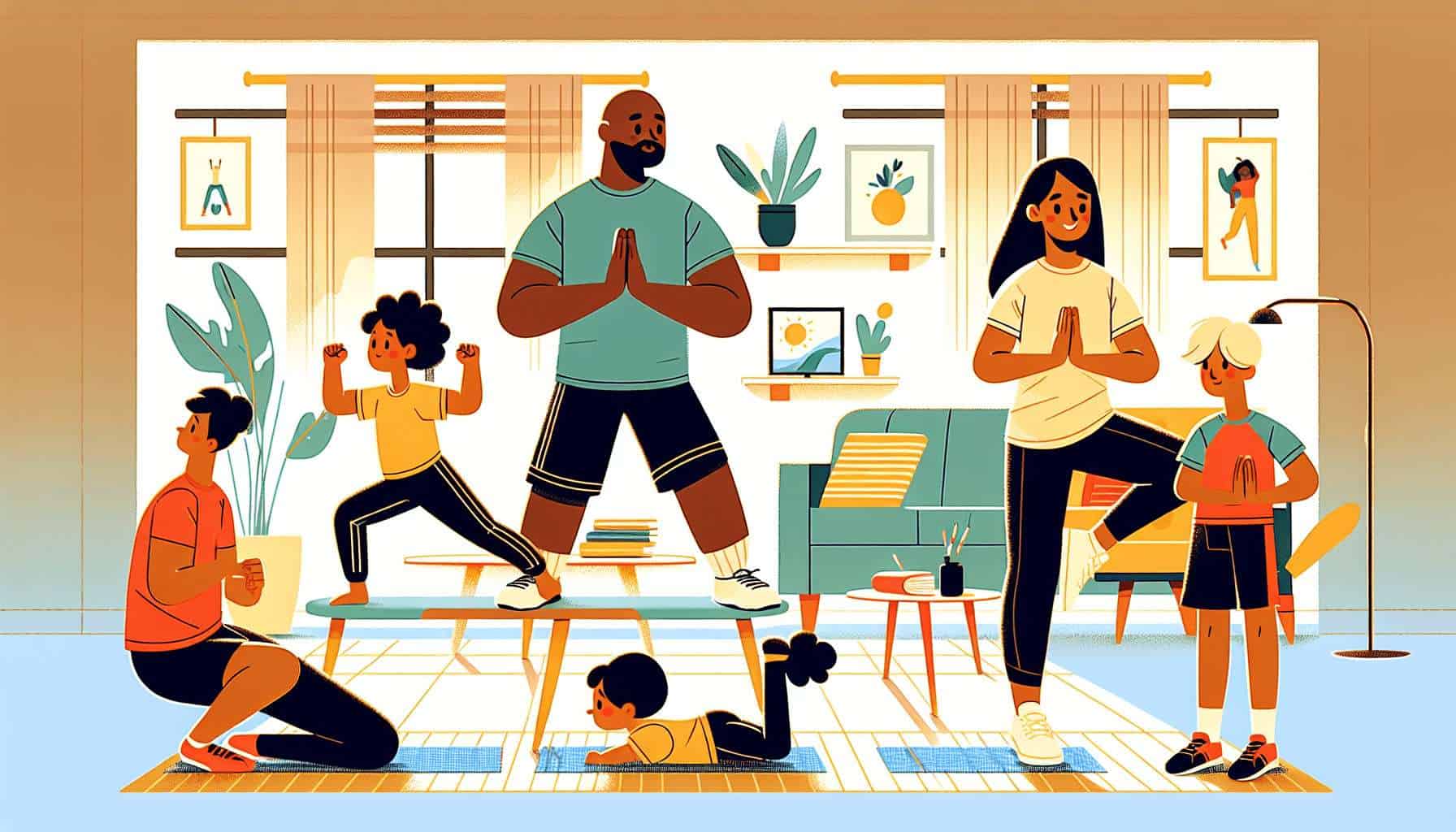
Confession: sometimes we skip the ‘perfect’ AI images and just can’t resist picking the most awkward ones. Hopefully they bring a smile to your face too!
You don’t need a Peloton, a garage gym, or a personal trainer who knows your kids’ middle names. You need permission to be imperfect, a bit of space, and five to 20 minutes.
- This guide covers quick warm-ups, five family-friendly workouts, safety tips, and ways to keep kids actually excited.
- This guide covers variations for toddlers, elementary kids, teens, and parents who want to feel human again.
- This guide covers a sample weekly plan and troubleshooting when motivation dips.
Quick Rules for Safe, Fun Family Workouts
A few tiny rules keep things safe and sane. Say them once, then model them like the responsible adult you are (while secretly hoping your kid will copy you).
- Warm up for 3–5 minutes: marching, arm circles, easy jogging in place.
- Keep options: demonstrate an easier and a harder version for each move.
- Make it play-based for younger kids: games > formal instructions.
- Hydrate, rest, and respect limits — no forced participation.
Safety and inclusivity
Check for hazards (toys, slippery rugs). If anyone has health concerns, adapt or check with a clinician. And remember: cheering matters more than perfect form when you’re five and trying to hop on one foot.
Fast Warm-ups (3–5 minutes)
Warm-ups don’t need to be tedious. Make them goofy and quick so kids show up willingly.
- March and reach: march in place, reach high on toes for 30 seconds.
- Toy pick-up jog: jog slowly and toss a toy into a bin every 10–15 seconds.
- Arm circles + shoulder rolls: 20 seconds each direction.
- Leg swings: hold a chair and swing each leg front-to-back 10 times.
Five Easy Family Workouts
Short, repeatable routines win. Here are options you can rotate through the week. Each one is designed to be scalable for preschoolers and parents alike.
1) Fifteen-Minute Family Circuit
Set a timer for 45 seconds work, 15 seconds rest. Repeat the circuit three times. Younger kids can do 30/30 or follow along for one round.
- Jumping jacks / star jumps (low-impact step-outs for toddlers).
- Squats (sit-to-stand from a low chair works for little ones).
- Push-ups (wall or countertop push-ups for beginners).
- Plank hold (knees down for kids or shorter holds).
- Running in place or high knees (kids can chase a balloon).
2) Dance Party Cardio (10 minutes)
Crank a playlist and rotate DJs. The goal is movement, not choreography. Use lights or a disco lamp for dramatic effect and instant enthusiasm.
- Round 1 (3 mins): freestyle — parents join or mimic kid-solo moves.
- Round 2 (3 mins): follow-the-leader — one person picks moves.
- Final jam (4 mins): family freestyle, cooldown walk and deep breaths.
3) Animal Moves for Little Kids
Toddlers and preschoolers love imagination. Animal moves build gross motor skills and giggles.
- Bear crawl: hands and feet on the floor, hips high. Short distance shuffles.
- Crab walk: tummy up, press through hands and feet. Try a 10–20 second race.
- Frog jumps: squat and spring up like a tiny frog (or step up for low-impact).
- Snake slither: lie on belly and wiggle forward using arms.
4) Strength + Core (10–15 minutes)
Build functional strength with moves everyone can modify. Use household items (water bottles, canned goods) as light weights.
- Deadlifts: hinge at hips, reach toward toes, stand tall (use a backpack for weight).
- Glute bridges: lie on back, lift hips; kids can put a toy on their belly.
- Supermans: lie face down, lift arms and legs together for posterior chain.
- Bicycle crunches: slow and controlled; switch to toe taps for younger kids.
5) Family Challenge Games (5–10 minutes)
These are perfect for days when motivation is low. Keep it light and reward effort with stickers or high-fives.
- Plank competition: who holds longest? Offer 10–30 second target windows.
- Balance beam: use tape on the floor for a steady-walk challenge.
- Timed tidy: race to pick up 20 toys — sprint, squat, toss, repeat.
Weekly Plan: Simple Rotation
A tiny plan beats a perfect plan. Try consistency over intensity for better long-term results.
- Monday: Dance Party (10–15 min)
- Tuesday: Strength + Core (10–15 min)
- Wednesday: Active rest — park play or family walk (20–30 min)
- Thursday: Family Circuit (15 min)
- Friday: Animal Moves + games (10–15 min)
- Weekend: One longer family activity — hike, bike, yard games
Keeping Kids Engaged (and Parents Sane)
Kids have short attention spans and excellent BS detectors. If it feels like punishment, they won’t come back for seconds.
Make it a game, not a lecture
Turn reps into story beats: each squat is a rocket count, each burpee is a superhero leap. Let kids lead a round — bossing is fun at age seven.
Rewards that actually work
Skip sugar bribes. Use micro-rewards that encourage movement: choose the playlist, pick dinner sides, or earn a family screen-free game night.
Equipment, Space, and Simple Swaps
You need minimal gear. A yoga mat, two bottles for weights, and a sense of humor go a long way.
- No dumbbells? Use canned goods, water jugs, or a laundry-filled backpack.
- Too little space? Do seated or standing versions; move furniture for three minutes.
- Outdoor option: backyard or driveway = instant fresh-air bonus.
If space is truly tiny, try wall-based exercises, standing marches, and partner stretches while seated.
Troubleshooting & Modifications
When things go off the rails (sudden toddler meltdown, teen eye-rolls), have backup moves that are low-effort but still count.
- Meltdowns: switch to calm movement — stretching or a family breathing exercise.
- Resistance: offer a ‘spectator’ role with a tiny responsibility (timer handler, music DJ).
- Soreness/fatigue: reduce intensity and focus on mobility for a day.
Remember: consistency builds habit. If a session gets truncated, that five minutes still wins later on when it becomes routine.
Small Wins, Big Impact
Simple home workouts for families aren’t about chasing a body ideal. They’re about more energy, better moods, and modeling a lifetime habit for your kids.
Start small. Laugh loud. Celebrate the tiny improvements — more stairs taken without whining, one extra plank second, fewer toy obstacles at pickup time.
FAQs
How long should simple home workouts for families be each day?
Aim for 10–20 minutes most days. Short daily sessions build habit and energy; mix in one longer family activity each week.
What are good kids’ room organization tips for making workouts easier at home?
Keep a small clear space, store equipment in a labeled bin, and have a ‘workout toy box’ so you can quickly clear the area and grab props.
How can I adapt family workouts for toddlers and teens?
Offer playful, game-based moves for toddlers (animal walks, balloon taps) and scaled strength/cardio options for teens (harder circuits, timed challenges). Always provide easier variations.
How do I keep kids engaged in longer routines or decluttering children’s bedrooms afterward?
Break routines into mini-games with rewards, rotate leadership, and tie cleanup to physical challenges (e.g., 10 squats per toy box emptied) to make tidying active and fun.