Printable Chore Charts for Kids: Your Sanity-Saving Sidekick
If kids did chores on instinct, parenting would be a calm spa experience. Since they don’t, printable chore charts for kids are the closest thing to parenting cheat codes—visual, low-drama, and surprisingly effective. Think of them as tiny contracts taped to the fridge that your child agreed to and then promptly forgot about, until you remind them. We’ll fix that.
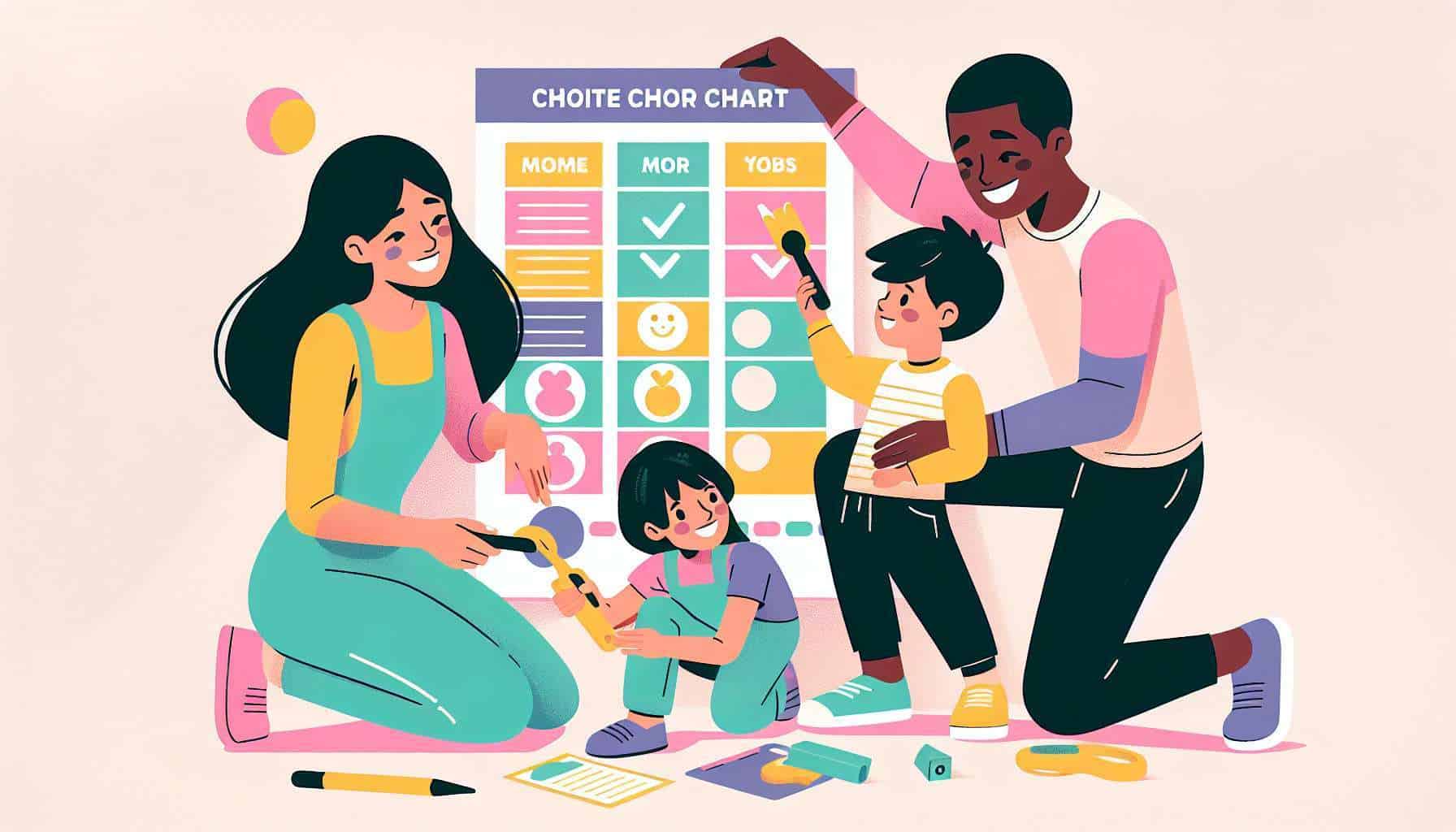
Confession: sometimes we skip the ‘perfect’ AI images and just can’t resist picking the most awkward ones. Hopefully they bring a smile to your face too!
Also try: Fun Holiday Crafts for Families: Easy Ideas
- This guide covers why chore charts work, how to pick the right one, step-by-step setup, reward systems, and troubleshooting.
- Examples for different ages and personalities.
- Printable templates, variations, and quick-start tips parents can actually use.
Why printable chore charts for kids actually work
Kids respond to structure, visuals, and immediate feedback. A chart turns vague requests—’clean your room’—into a sequence of clear actions: make bed, put toys away, put laundry in hamper. That clarity reduces power struggles and teaches responsibility.
Printable charts are great because you can customize them quickly: change tasks as skills grow, swap stickers, or add a weekend list. No app logins, no screens, and zero chance of the Wi‑Fi blaming system failure.
Science and psychology in one sticky note
Visual cues + small wins = habit building. When a child checks an item or earns a sticker, dopamine gets a tiny boost. Repeat that across days and you have an adult who can do dishes without a TED Talk from you someday. Maybe.
How to pick the right printable chore chart
Not all charts are created equal. The key is matching layout and design to your child’s age, attention span, and temperament. Here are quick rules:
- Toddlers (2–4): Big icons, simple 2–4 steps, laminated for stickers.
- Early elementary (5–8): Add checkboxes or magnets; morning and bedtime columns help routine.
- Tweens (9–12): Task lists with time estimates, space for independent choices and consequences.
Want a minimalist option? A weekly grid with three must-do tasks per day beats a complicated chart that becomes wallpaper.
Paper, laminate, app—or magnet?
Printables are flexible: use them on the fridge with magnets, in a binder, or laminated for dry-erase markers. Apps sound modern but often add friction—notifications, account creation, updates—while a simple printable sits in plain sight and gets done.
Step-by-step: Set up a printable chore chart your child will use
Follow this routine to install the chart and make it stick without nagging (too much).
- Pick the right template for your child’s age—icons for small kids, lists for older kids.
- Customize tasks together. Kids are more invested if they help choose items.
- Place it where the child sees it often—bedroom door, fridge, or the bathroom mirror.
- Introduce it as a game or challenge, not a punishment.
- Use visible rewards (stickers, tokens) and connect them to real perks.
- Review weekly with quick praise and one constructive tweak.
When you customize, keep tasks short and specific. Replace ‘clean room’ with ‘put books on shelf’, ‘put dirty clothes in hamper’, and ‘make bed’. Two minutes per task is better than a looming hour-long chore.
Reward systems that don’t create tiny bribes
There’s a difference between motivating and dangling a bribe. The goal is internal motivation—pride and competence—backed by small external rewards while habits form.
- Stickers and tokens: great for young kids; trade 10 tokens for a bigger reward.
- Privilege rewards: choose a movie, a later bedtime on weekends, or picking dinner.
- Non-material rewards: extra one-on-one time, a special outing, or choosing a family activity.
Scale rewards down as chores become routine. If your child starts making their bed by default, the sticker economy can be retired like last season’s fads.
Age-based examples and printable ideas
Ages 2–4: Tiny helpers
Use large pictures and magnets. Tasks: put blocks in bin, feed stuffed animal, help wipe table. Give immediate praise and a sticker for each completed item.
Ages 5–8: Building independence
Introduce checkboxes and simple time-based tasks like ‘brush teeth’ and ‘pack backpack’. Let them pick one extra responsibility for the weekend to boost ownership.
Ages 9–12: Responsibility and choice
Use a reusable printable with a weekly points system. Include chores like taking out trash, loading the dishwasher, and managing a small weekly allowance linked to performance.
Customizing and adapting printable chore charts
No chart fits forever. Be ready to rotate tasks, increase difficulty, and change rewards. If your child starts doing a task automatically, replace it with something slightly harder to maintain growth.
Here are quick variations you can print or make at home:
- Morning vs evening mini-charts for kids who get overwhelmed by full days.
- Weekend chores with shared family tasks printed as a checklist.
- A chore wheel: spin for the day’s assignment (fun but fair).
- A ‘pride chart’ listing skills learned—helps with intrinsic motivation.
Troubleshooting: When the chart becomes wallpaper
If your printable chore charts for kids end up as colorful wall decoration, try these quick fixes.
- Rotate a reward every two weeks to refresh interest.
- Shorten the task list—three meaningful tasks beat ten ignored ones.
- Make completion visible in a new way: a jar of marbles, a progress ladder, or a digital photo evidence channel.
- Pair the chart check with a ritual—five minutes of praise or a high-five.
Sometimes the problem is the parent: inconsistent enforcement kills momentum. Decide the rules together and follow them for two weeks before changing anything.
Printables, templates, and where to find them
There are tons of free printable chore charts online—grids, themed charts, and editable PDFs. Look for printables that let you add or remove tasks easily so you can adapt as your child grows.
If you like tech: download a printable, fill it in digitally, and print or email it to a family member. If you like craft: laminate the chart and use dry-erase markers.
Quick-start checklist (print and use today)
- Pick a template that matches your child’s age and attention span.
- Sit down with your child to choose 3–6 clear tasks.
- Decide on visual feedback: stickers, magnets, or tokens.
- Post the chart where your child sees it every morning.
- Review and celebrate small wins weekly.
Follow these steps and you’ll be surprised how quickly small responsibilities become part of the routine. The goal isn’t perfection; it’s progress (and fewer reminders from you).
FAQs
How do printable chore charts for kids help with kids’ room organization?
Printable chore charts break down room-cleaning into specific tareas like ‘put toys in bin’ or ‘books on shelf’. Clear steps reduce overwhelm and help kids practice consistent habits—pair them with a small daily reward and visible progress markers.
What chores are age-appropriate for printable charts (toddlers to tweens)?
Toddlers: picking up toys, putting books on a shelf. Early elementary: making bed, brushing teeth, setting plates. Tweens: taking out trash, loading dishwasher, prepping school bag. Keep tasks short, specific, and achievable.
Can printable chore charts work without rewards, or will kids just ignore them?
Charts can work without material rewards if you focus on praise, routines, and meaningful responsibility. For younger kids, combine visuals with small rewards; transition to intrinsic motivators as habits form.
How often should I change or update a printable chore chart?
Update every 2–4 weeks depending on interest and progress. Rotate tasks to increase skill, replace mastered tasks with slightly harder ones, and refresh rewards occasionally to keep engagement high.
Are printable chore charts better than apps for managing chores?
For many families, yes—printables are visible, simple, and don’t require screens. Apps can be useful for older kids who like tech, but a printable on the fridge often wins for daily routines and younger children.