Why handmade gifts work so well for preschoolers
A preschooler doesn't have a budget, but they do have glue, crayons, and a lot of enthusiasm. A gift they made themselves, even a lopsided one, gives them something a store-bought present can't: real ownership over the giving part of the holiday, not just the receiving part.
Also try: Christmas Crafts Kids Will Love: Easy Holiday Projects
Below are ten Christmas gifts preschoolers can realistically make for a parent or grandparent, with simple materials and steps sized for three to five year olds. Most can be finished in one sitting, though a few need a day of drying time before they're ready to wrap.
- This guide covers ten gift ideas, what makes a gift preschooler-friendly, and tips for wrapping and giving them.
- Every project uses washable, easy-to-find craft supplies.
- Notes on which ideas suit younger versus older preschoolers.
What makes a good preschooler-made gift
Not every craft translates well into a gift a parent will actually keep. A few things separate a project that works from one that ends up frustrating everyone involved.
- One or two main steps, so a short attention span can see it through to the end.
- Materials the child can handle mostly on their own, with an adult only for baking, hot glue, or fine cutting.
- A result sturdy enough to survive being carried around, unwrapped, and displayed.
- Something the parent will actually use or see often, like a mug, a magnet, or a bookmark, rather than a shelf item that gets put away.
10 Christmas gifts preschoolers can make for parents
Pick two or three based on the supplies you already have on hand and how much drying time you can spare before the gift needs to be wrapped.
1. Handprint or Fingerprint Keepsake Ornament
A handprint on paper is common, but pressing it into air-dry clay creates something a parent can actually hang on the tree year after year.
- Materials: air-dry clay, a rolling pin, a straw, and paint or a permanent marker.
- Method: flatten the clay to about half an inch thick, press the child's palm or fingertip firmly into it, then poke a hanging hole near the top with the straw before it dries.
- Finish: once fully dry, usually a day or two, let the child paint the print or write the year on the back with a permanent marker.
2. Painted Rock Paperweight
Smooth stones turn into a paperweight or garden marker with very little cleanup.
- Materials: a smooth, palm-sized rock, acrylic paint, and a paintbrush.
- Method: wash and dry the rock, then let the child paint a simple design, handprint, or their name.
- Finish: a coat of clear sealant once the paint is dry keeps the color from chipping with regular handling.
3. Photo Magnet Frame
A small photo turns into something a parent will actually see every day on the fridge.
- Materials: a flat cardboard or wooden frame shape, craft glue, small decorations like buttons or pom-poms, a magnet strip, and a small printed photo.
- Method: have the child glue decorations around the frame's edge, then help attach the photo and the magnet strip to the back.
4. Salt Dough Handprint Medallion
The same salt dough used for small ornaments also works well as a flat, hand-sized keepsake medallion.
- Materials: 1 cup flour, 1/2 cup salt, and 1/2 cup warm water mixed into a dough, plus a rolling pin and a straw.
- Method: roll the dough about a quarter-inch thick, press the child's hand into the center, then poke a hanging hole and bake at 200°F (95°C) for two to three hours until firm.
- Finish: paint once fully cooled, and consider writing the child's age on the back before baking.
5. "Kid Coupons" Love Book
A tiny stapled booklet of simple promises tends to get more use than most store-bought gifts.
- Materials: a few sheets of paper folded and stapled into a booklet, or index cards on a ring, plus crayons or markers.
- Method: help the child think of a few simple things they can offer, like one big hug or help setting the table, and draw or dictate one per page.
- Finish: let the child decorate the cover; no wrapping needed.
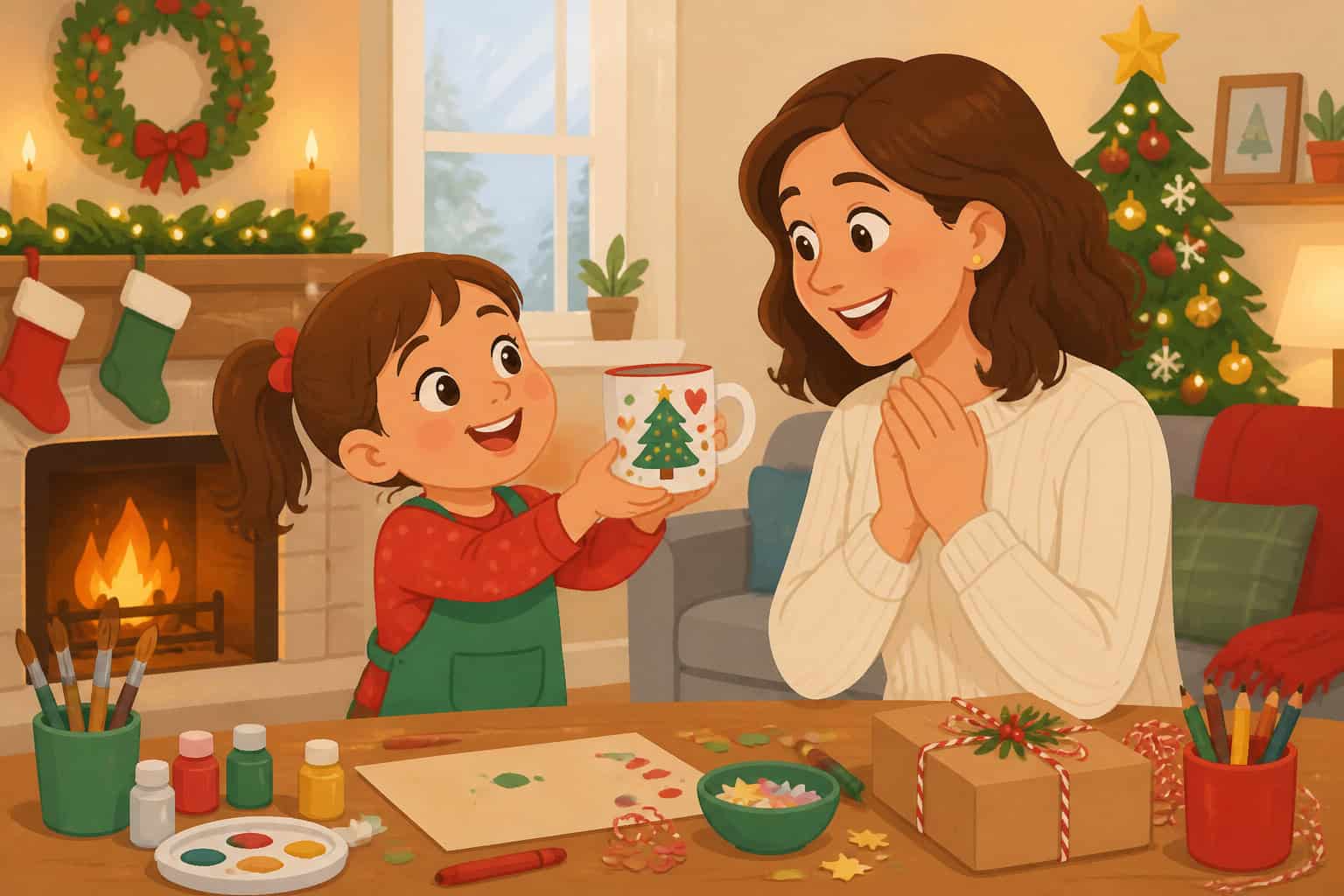
6. Decorated Coffee or Tea Mug
A plain ceramic mug decorated with paint pens made for ceramics turns into a gift a parent uses every morning.
- Materials: a plain ceramic mug and paint pens labeled safe for ceramics, checking the packaging for oven-bake or dishwasher-safe instructions.
- Method: let the child draw dots, lines, or a simple picture around the mug, then follow the paint pen's own curing instructions, usually a low oven bake, to set the design.
7. Pinecone Bird Feeder
A gift that's also a small project the family can hang outside together makes a nice change from a shelf item.
- Materials: a pinecone, sunflower butter or plain peanut butter, birdseed, and string.
- Method: have the child spread the butter over the pinecone with a craft stick, then roll it in birdseed and tie on a string for hanging.
8. Pressed Flower or Leaf Bookmark
A pressed leaf or flower sealed under clear tape makes a simple bookmark that holds up surprisingly well.
- Materials: a pressed flower or leaf, a cardstock strip, clear contact paper or packing tape, and a hole punch.
- Method: arrange the pressed piece on the cardstock, seal both sides with contact paper or tape, trim the edges, and punch a hole for a ribbon tassel.
9. Hand-Decorated Wrapping Paper
Instead of buying a separate gift, let the child decorate the wrapping itself for a small present chosen ahead of time.
- Materials: a roll of plain kraft paper, stamps or a cut potato stamp, and washable paint.
- Method: roll out a length of paper, let the child stamp or paint a repeating pattern, and let it dry flat before wrapping.
10. "Why I Love You" Jar
A small jar filled with slips of paper turns into something a parent can reread all year, long after the holiday is over.
- Materials: a small jar, strips of paper, and a marker.
- Method: help the child dictate or draw a few reasons they love their parent, one per slip, then fold and drop them into the jar.
Wrapping and giving the gift
The gift itself matters more than the presentation, but a few small choices make the moment land better.
- Budget for drying time. Clay and salt dough projects need a day or two before they can be painted, so start those first if you're working toward a deadline.
- Let the child pick which gift to give if they made more than one. Having a say in the choice makes the moment feel more like their own.
- Keep the wrapping simple. A decorated paper bag or their own hand-decorated wrapping paper is plenty; elaborate wrapping usually just gets torn apart in seconds anyway.
Quick supplies checklist
A short shopping list that covers most of the projects above.
- Air-dry clay or salt dough ingredients (flour, salt, water)
- Washable acrylic or tempera paint, paintbrushes, and a clear sealant spray
- A plain ceramic mug and ceramic-safe paint pens
- Craft glue, a hole punch, and clear contact paper or packing tape
- A small jar, index cards or paper, and a pinecone with birdseed
Keeping it low-pressure
None of these need to look polished. A crooked handprint or a lopsided mug design is usually the whole point to the parent receiving it, since it captures exactly how small their child's hands are this year.
If a project doesn't come together the way you pictured, a simpler backup, like the love book or the why-I-love-you jar, can be finished in minutes with materials most homes already have.
FAQs
What Christmas gifts can a 3 or 4 year old realistically make?
Projects with just one or two steps work best at this age, like a handprint ornament, a painted rock, or a decorated photo magnet. Save projects with more steps, like the mug or bookmark, for kids closer to five who can follow along with more patience.
How far ahead should we start these preschool Christmas gifts?
Start at least a week before you need to wrap them. Salt dough and air-dry clay both need a day or two to dry or bake fully before they can be painted, and the paint needs its own drying time on top of that.
Are these gifts safe for a preschooler to make with minimal help?
Most steps are safe for a preschooler to do themselves, but an adult should handle any oven baking, hot glue, or fine cutting. Choose washable, non-toxic paint and glue for anything a young child will handle directly.
What if my child loses interest partway through a project?
Keep individual steps short and let the finishing step, like painting or writing a name, happen on a separate day if needed. A gift doesn't need to be made in one sitting to still feel special.