Why play matters for three-year-olds
At three, kids are like tiny exploratory scientists with sticky hands and wildly specific opinions about which shoe is ‘the wrong one.’ Play is how they learn language, gross and fine motor skills, self-control, and imagination. The right activities are part teaching moment, part chaos management, and all about fun.

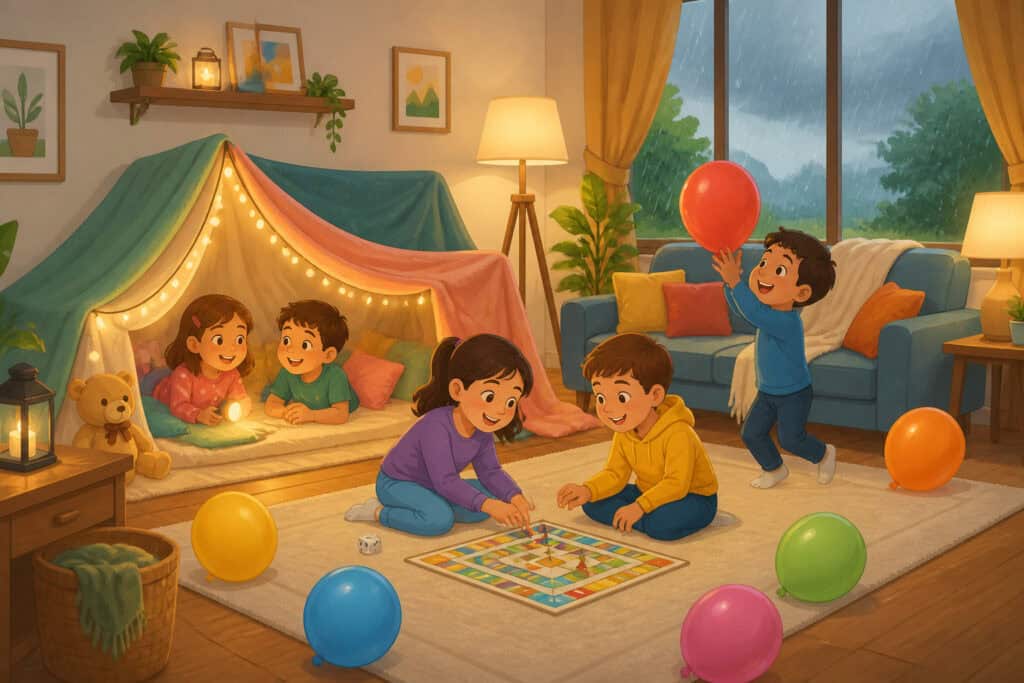
Confession: sometimes we skip the ‘perfect’ AI images and just can’t resist picking the most awkward ones. Hopefully they bring a smile to your face too!
Also try: May Children’s Activities: 30 Playful Ideas
- This guide covers easy indoor and outdoor ideas.
- You’ll get step-by-step how-tos for sensory and active play.
- There are low-prep options, learning-through-play tips, and ways to scale activities for siblings.
Quick principles for choosing activities
Before we dive into specifics, a few short rules parents actually like:
- Short attention spans: keep activities 5–20 minutes based on interest.
- Low-prep beats Pinterest perfection most days.
- Mess is okay — plan for it rather than fighting it.
- Follow your child’s lead: offer choices, not ultimatums.
Easy, low-prep indoor activities
Sensory bin — the evergreen winner
Sensory bins are calming and endlessly adaptable. Use a shallow plastic tub and fill with rice, dry pasta, water beads, or even torn tissue paper. Add scoops, cups, a few toys, and you’ve bought yourself a little quiet time.
- Step-by-step: choose base (dry rice or beans), add 3–5 small tools, drop in a theme toy.
- Variation: add measuring cups for early math, or toy animals for storytelling.
- Safety: supervise at all times to prevent mouthing of small items.
Play dough with a purpose
You can buy play dough or make a quick batch with flour, salt, water, and oil. Three-year-olds love squishing, rolling, and stamping. It strengthens little hands for future writing.
- Quick recipe: 2 cups flour, 1 cup salt, 1 cup warm water, 1 tbsp oil — mix and knead.
- Add-ins: food coloring, glitter (optional), or cookie cutters for shapes.
- Learning angle: count balls of dough, make letters, or do color hunts.
Indoor obstacle course
Turn furniture and pillows into a safe course to crawl under, jump over, and balance on. It’s perfect for rainy days and uses tons of energy.
- Set-up: tape a start and finish, add stations like ‘hop 3 times’ or ‘crawl under the blanket cave.’
- Variation: time runs for older siblings, or use stuffed animals as targets.
- Skills: gross motor, following directions, sequencing.
Outdoor adventures that don’t require a park
Nature scavenger hunt
A scavenger hunt makes a walk exciting. Tailor the list to your neighborhood: find a smooth rock, a yellow leaf, something crunchy, or a feather.
- Prep: make a simple picture list or use a verbal checklist.
- Tip: bring a small bucket to collect treasures, then sort them at home.
- Learning: vocabulary, observation, and categorizing.
Bubble stations and sidewalk art
Bubbles are basically tiny miracles for toddlers. Sidewalk chalk invites longer creative play and is easy to wash off.
- Bubble tip: use different wands (pipe cleaners, cookie cutters) to make varied bubble sizes.
- Chalk idea: draw a hopscotch, roads for toy cars, or simple shapes to trace.
- Variation: tape out a ‘landing pad’ target for jumping games.
Creative arts and crafts (without the meltdown)
Sticker collages and simple gluing
Stickers are perfect for fine motor practice with almost zero mess. Provide paper, stickers, and maybe a dot marker for extra fun.
- Activity: theme collages (animals, colors, shapes).
- Variation: make greeting cards for family members.
- Skills: pincer grasp, creativity, language development.
Music, dancing, and homemade instruments
Three-year-olds love rhythm. A playlist and some noisy instruments (rice-filled shakers, pots and wooden spoons) lead to movement, counting, and turn-taking practice.
- Try a freeze dance to practice stopping on cue.
- Make an ‘orchestra’ where each child chooses an instrument and plays along.
- Learning: rhythm, listening skills, cooperation.
Quiet time activities that still teach
Not every activity needs to be a production. Quiet, focused play builds attention and calm—both rare treasures.
Story baskets and puppet shows
Create a small basket with a favorite book and a few related props or puppets. After reading, encourage your child to retell the story with the toys.
- Benefits: narrative skills, memory, expressive language.
- Variation: swap toys weekly to refresh interest.
- Pro tip: use simple scarves as tiny costumes for puppet shows.
Matching and sorting games
Sorting socks, matching colored pom-poms to cups, or tiny toy laundry are calming and educational. They sneak in math skills without flashcards.
- Try a ‘color clean-up’—put toys into baskets by color.
- Use muffin tins to sort small objects safely.
- Skill focus: categorization, counting, fine motor control.
Play dates and social skills
Three-year-olds are testing social waters: sharing, turns, and parallel play. Short, structured play dates work best—think 30–60 minutes with a clear activity.
- Keep activities goal-oriented: build a tower together, paint a mural, or do a cooperative obstacle course.
- Model language for sharing: ‘Your turn, then mine.’
- Expect regressions; skills grow with practice.
Troubleshooting and keeping your sanity
When an activity bombs (and it will), pivot quickly and with dignity. Offer a two-choice alternative and save anything that worked for another day.
- If attention fades: switch to movement (dance or a quick run outside).
- If tantrums start: offer a calm-down corner with a favorite book or sensory toy.
- If mess is too much: move outdoors or put items in a washable tub.
Packing activities for travel and transitions
Keep a small ‘go’ bag with books, stickers, a small sensory tube, and a surprise toy. These help during transitions like doctor visits or waiting rooms.
- Snack, a familiar lovey, and one new small toy = reliable trio.
- Downloadable audio stories are great for car rides.
- Rotate items so the ‘surprise’ feels fresh when needed.
Final thoughts and a gentle challenge
You don’t need an endless supply of Pinterest-perfect crafts to give your child a rich play life. Great activities for 3 year olds are accessible, playful, and forgiving. The goal is curiosity, confidence, and connection — not a magazine-worthy table.
Challenge: pick two ideas from this guide and try them over the next week. Notice what your child returns to, and keep a tiny ‘winner’ list for rainy days.
FAQs
What are some quick great activities for 3 year olds when I’m short on time?
Try a 5-minute sticker collage, a sensory jar to shake, or a two-song freeze dance. These are low-prep, grab-and-go, and usually hold attention long enough to make a snack.
How can I include learning in play without pressure for my 3 year old?
Turn play into learning by adding simple prompts: count blocks as you stack, name colors during sorting, or ask your child to retell a story with toys. Keep it casual and praise effort over perfection.
What outdoor great activities for 3 year olds are safe and engaging?
Nature scavenger hunts, bubble stations, and sidewalk chalk are safe, low-cost, and engaging. Dress for the weather, bring water, and set simple boundaries to keep exploration safe.
How long should activities for a 3 year old last?
Expect 5–20 minutes per activity depending on interest. Rotate activities and offer choices; if they’re engaged, let it stretch a little, but be ready to pivot if attention wanes.