Why traveling to Japan with kids is worth the effort
Take a deep breath. Japan is one of the most child-friendly countries on earth: spotless trains, tiny toilets with heated seats if you’re lucky, epic convenience stores, and public spaces that somehow manage chaos with order. Traveling to Japan with kids means introducing them to trains that are punctual to the second, cartoon-filled snack aisles, and temples where they can bow and be silly. It’s educational, safe, and full of wow moments.
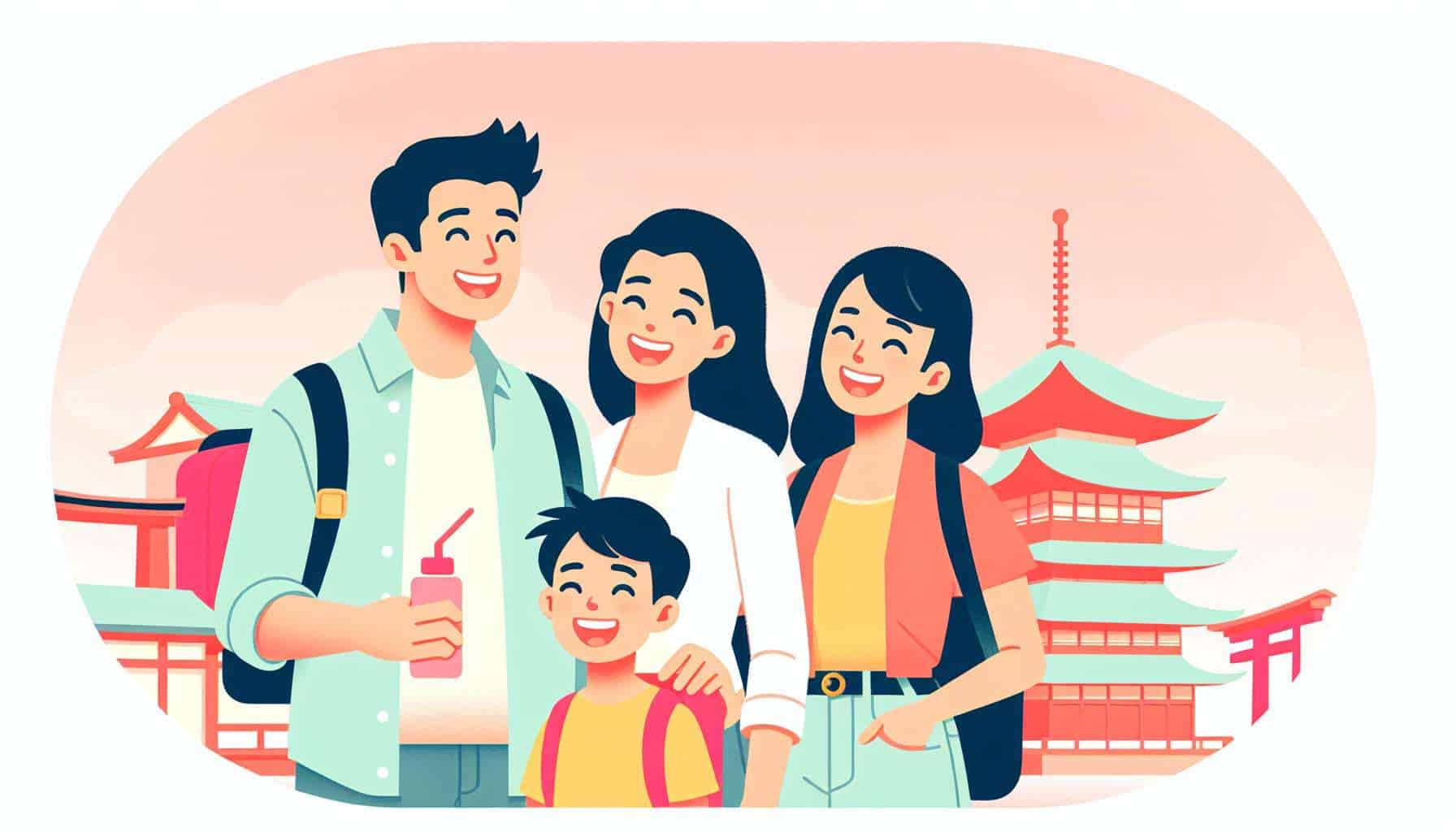
Confession: sometimes we skip the ‘perfect’ AI images and just can’t resist picking the most awkward ones. Hopefully they bring a smile to your face too!
Also try: Flying with Kids: Survival Guide for Parents
Yes, you’ll need to plan differently than a romantic trip. Bring fewer shoes and more snacks. Expect meltdowns in polite places. But with a few strategies, the trip becomes less ‘survive’ and more ‘family legend.’
- This guide covers: planning and paperwork
- packing and kid-gear that actually fits a suitcase
- transport: trains, strollers, and the JR Pass truth
- family-friendly destinations, day-by-day itinerary ideas
- food, naps, safety tips, and how to avoid terminal boredom
Planning & logistics: the boring bits that make everything easier
Passports, visas and timing
Start with passports. Apply early—many parents forget renewals. For most nationalities, Japan allows short tourist stays visa-free, but check before you book. Traveling to Japan with kids is easier if your documents are sorted weeks ahead.
Flights: choosing the right schedule
A direct overnight flight is usually worth the extra cash. Kids often sleep more on night flights and you’ll land ready to explore. If you fly daytime, plan a low-key first day. Book seats with bassinet/child-seat options early; these disappear fast.
Japan rail, IC cards and transport basics
The transit system is brilliant—fast, clean, and surprisingly kid-friendly. Decide whether a JR Pass makes sense: it’s great if you’ll hop between Tokyo, Kyoto, and Osaka quickly. For urban travel, pick up Suica or Pasmo IC cards for each adult and load them with a little cash.
Strollers are allowed on trains, but avoid rush hour. Many stations have elevators, though not everywhere—pack a baby carrier for tight station transfers or tiny-steps routes.
Packing & gear: what to bring (and what to leave at home)
The minimalist, parent-tested packing list
You don’t need to bring your home. Convenience stores and department stores in Japan carry most baby supplies. But bring these essentials:
- A compact stroller that folds quickly (Japan elevators can be tiny)
- A lightweight carrier for temples and crowded stations
- Favorite snacks for emergencies (granola bars, small cookies)
- A small kit: bandaids, kid-safe pain reliever, blister plasters
- A portable charger and a couple of printed reservations/addresses
If you have picky-eater kids, bring a few familiar items—yet leave heavy food in checked luggage; convenience stores are lifesavers for single-serve milk, yogurt, and simple bento-style meals.
Where to go: kid magnets by region
Tokyo: sensory overload (in a good way)
Tokyo is a theme-park city: anime shops, character cafes, museums with hands-on exhibits, parks with playgrounds, and the most photogenic toilets. Highlights:
- Ghibli Museum (tickets in advance; magical for ages 4+)
- TeamLab Planets (sensory fun for older kids)
- Ueno Zoo and Ueno Park for an easy nature break
- Odaiba for museums, rides, and waterfront walks
Kyoto & Osaka: temples, deer, and neon
Kyoto’s calm temples and garden paths are great for slower days. Let kids feed deer in Nara (supervised, they can be pushy). Osaka is energetic and famously food-focused—takoyaki and okonomiyaki often win over picky eaters.
Staying & eating: where to sleep and how to eat like a local (kinda)
Accommodations: hotel or apartment?
Hotels with family rooms and Western-style beds simplify life. Apartments/Airbnbs offer kitchens for reheating and calming nighttime routines. Consider proximity to a train station—10 extra minutes of walking with tired kids feels like an hour.
Food: getting kids to eat sushi (or at least rice)
Japan’s kid options include curry rice, tonkatsu, plain udon, and mentaiko pasta. Conveyer-belt sushi restaurants are fun and allow choice without commitment. For babies, convenience stores have purees and milk boxes; for older kids, try family restaurants (famiresu) with kids’ sets.
Keeping kids happy: sanity-saving tips
Small comforts go a long way: consistent nap times, a familiar bedtime toy, and a visual schedule so kids know what’s next. Balance high-energy activities with quiet ones like temple visits, gardens, or a soft-play indoor park.
- Use trains as reset times—pack a sticker book or a surprise toy
- Plan one big attraction per day, then keep the rest flexible
- Teach simple Japanese phrases (hello, thank you) for engagement
- Rotate snacks so food feels like a treat, not a bribe
Sample 10-day family itinerary (flexible, tested)
This sample balances big sights with chill days. Feel free to swap or skip—kids change plans better than we do.
- Day 1: Arrive Tokyo, short walk, early bedtime
- Day 2: Ueno Zoo, Ameyoko snack wandering, easy evening
- Day 3: Ghibli Museum or TeamLab (book ahead), park time
- Day 4: Day trip to Yokohama—CupNoodles Museum & waterfront
- Day 5: Shinkansen to Kyoto (experience the bullet train), short shrine visit
- Day 6: Arashiyama bamboo grove, monkey park or boat ride
- Day 7: Nara day trip: deer park, Todai-ji, return to Osaka
- Day 8: Osaka Aquarium and Dotonbori food crawl
- Day 9: Rest day—local market, playground, souvenir shopping
- Day 10: Depart—emergency last-minute souvenir vending-machine run
Safety, health and money tips
Japan is safe, but preparation matters. Carry photocopies of passports, a list of emergency contacts, and basic meds. Tap water is safe. Use contactless payment where you can, but carry some cash—many small shops are cash-only.
If anyone needs medical care, clinics are efficient. Know where the nearest 24-hour hospital is in each city you visit.
Final pep talk: you’ve got this (really)
Traveling to Japan with kids won’t be flawless. You’ll have mismatched socks at a temple, a meltdown on a spotless train, and yet absolute magic too. The key is realistic expectations, a few creature comforts, and a willingness to embrace the unexpectedly wonderful.
Plan less, prioritize smiles, and book that Ghibli ticket early. Your future self (and your kids) will thank you.
FAQs
Is traveling to Japan with kids safe for toddlers and babies?
Yes—Japan is very safe, clean, and family-friendly. Bring a carrier for tight stations, carry basic meds, and know your nearest clinic. Many places have changing stations and the people are helpful.
Do I need a JR Pass when traveling to Japan with kids?
A JR Pass is worth it if you’ll make long-distance trips (e.g., Tokyo–Kyoto–Hiroshima) over a short period. For a single-city stay, IC cards like Suica are better for flexibility.
What foods will picky eaters eat while traveling to Japan with kids?
Kids often enjoy curry rice, plain udon, tempura, onigiri (rice balls), and tonkatsu. Convenience stores also offer familiar snack options and single-serve milk and yogurt.
How do I handle stroller and train logistics when traveling in Japan with kids?
Use a compact stroller that folds quickly. Avoid rush hours, look for station elevators, and carry a soft carrier for crowded stations or temple steps.