Sibling rivalry: the short version
If your household sounds like a courtroom drama, a wrestling match, and a bargain-basement talk show all at once—welcome to sibling rivalry. It’s normal, noisy, and occasionally cruel. But it’s also an enormous chance to teach conflict resolution, empathy, and how to negotiate when the stakes are the last slice of pizza.
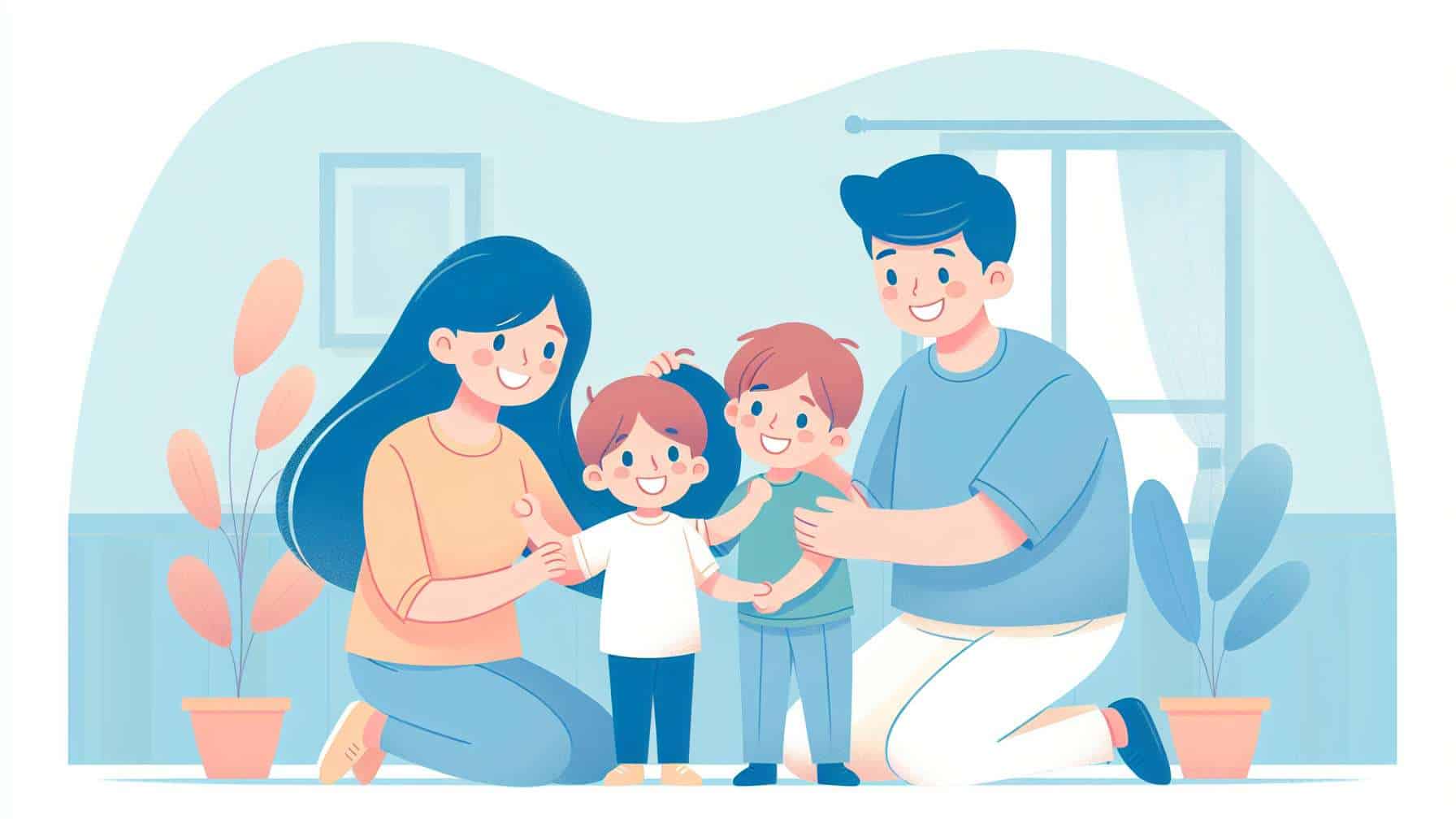
Confession: sometimes we skip the ‘perfect’ AI images and just can’t resist picking the most awkward ones. Hopefully they bring a smile to your face too!
Also try: How to Get Kids to Do Chores — A Parent’s Playbook
- This guide covers quick de-escalations to stop fights fast
- This guide covers long-term sibling rivalry solutions that build cooperation
- This guide covers when to step in, and when to let them work it out
This post is written parent-to-parent: warm, a little sarcastic, and very practical. I’ll give step-by-step scripts you can actually say without crying. Expect examples for toddlers through teens, chore-chart ideas, and a few non-negotiables that actually work.
Why kids fight (and why that’s useful, sometimes)
Kids fight for predictable reasons: attention, fairness, boundaries, and stuff ownership. They also fight because emotions are big and brains are still under construction. That doesn’t make it fun, but it does make it fixable.
Understanding the root keeps you from becoming the angry referee. Instead, you get to be the coach who teaches better moves.
Common triggers (so you can outsmart them)
- Perceived unfairness: different treats, different rules.
- Scarcity: one toy left, three kids, zero miracles.
- Attention hunger: when a kid feels invisible they poke sibling buttons.
- Different developmental stages: a 4-year-old and 10-year-old don’t negotiate the same way.
Fast, calm de-escalation: immediate sibling rivalry solutions
When the shouting starts, your job is simple: stop the adrenaline. Less drama equals fewer scars.
A 3-step calming script
- Step 1 — Pause and Separate: Briefly separate the kids (different rooms or corners) for 60–120 seconds. This isn’t punishment; it’s emotional breathing space.
- Step 2 — Name the Feelings: Calmly say, “You seem furious/teary/overwhelmed.” Naming reduces intensity and gives kids language to own their feelings.
- Step 3 — One Thing at a Time: Ask the child who feels most out of control what they want to happen next. Offer two reasonable choices (not fifty).
Scripts are golden because kids test tone. Try: “I see you’re both angry. We will not hit. Let’s take a minute, then tell me what you want—toy back, turn-taking, or help from me?”
Teach conflict skills with mini-lessons
Stopping fights is temporary. Teaching skills is permanent. Slot five-minute lessons into snack time or car rides and call them family ‘upgrade sessions.’
Short lessons you can teach in five minutes
- Use ‘I’ statements: Practice “I feel upset when you take my toy” instead of “You always…”.
- Turn-taking timer: Two minutes on the timer, then swap. Older sibling gets points for being patient.
- Fair-split practice: Split snacks or toys and narrate your thinking—“Half for you, half for Sam—why?”
Role-play is huge. Play the annoying sibling for a minute and then flip. Kids laugh and learn. You get brownie points for acting out a villain badly.
Systems that reduce fights before they start
Designing your home to prevent fights beats constant policing. These are sibling rivalry solutions that work because they change the environment.
Practical systems to try today
- Clear toy zones: Keep shared toys in common areas and personal toys on bedrooms shelves.
- Ownership labels: Let kids decorate bins for ‘Mine’, ‘Yours’, and ‘Share’—labels reduce confusion.
- Choice budgets: Give each child a weekly ‘choice’ they can spend on extra screen time, dessert, or choosing a family game.
When something is clearly marked as shared versus personal, the number of boundary disputes falls dramatically. Promise.
Fairness without being a referee
Kids shout ‘That’s not fair!’ whenever the world reveals its preference for chaos. The trick is reframing fairness as equity, not sameness.
Equity rules that actually feel fair
- Match responsibility to age: The older child folding laundry? Fine. Expecting a preschooler to fold is not fairness; it’s cruelty.
- Rotate perks: Instead of equal screen time, rotate who picks the movie each Friday.
- Explain decisions: Quick, honest reasons diffuse resentment—“I gave mom this job because she had a long day.”
Kids accept inequality when it’s explained. Try, “You get a later bedtime on weekends because you’re older and already finished homework.” Boom: fewer fights about lights out.
When to step in—and when to let them learn
Not every sparring match needs a parent intervention. Letting kids handle tiny conflicts builds negotiating muscles. But don’t ignore danger signs.
Red flags that require adult action
- Physical harm beyond light shoving or roughhousing.
- Bullying patterns: repeated exclusion or mean talk aimed at the same child.
- Emotional withdrawal: a child who avoids family spaces or claims they can’t be home anymore.
If you see those signs, step in with curiosity, not just consequences. Ask open questions and involve each child in creating a repair plan.
Repair rituals that actually work
After conflict, rituals help relationships heal. Without a ritual, grudges ossify into long-term resentment.
Quick repair steps (doable even when you’re tired)
- Step 1: Acknowledge the hurt (“That sounded mean, and it hurt you”).
- Step 2: Responsibility (“I’m sorry I hit/said that”).
- Step 3: Fix it (share toy back, do a small kindness, or set a clear boundary).
- Step 4: Move on (have a neutral activity like building Legos together).
Small gestures—an apology note, a sticker given by the offender, or a shared joke—reset the relationship far faster than a long lecture.
Special cases: big age gaps, blended families, and special needs
Some sibling dynamics need bespoke fixes. Big age gaps require adult-ish responsibilities for older kids and protected play for littles. Blended families need rituals to create new shared identity. Children with special needs may need scaffolding and adult-led negotiation.
In all of these, consistency and communication are the keys. When routines and expectations are stable, fights drop.
Keeping your sanity: self-care for the referee
Your emotional bandwidth is part of the equation. If you’re running on fumes, everything gets louder. So build small buffers that give you breathing room.
- Secret five-minute escape: put on a playlist and stand in the laundry room for a breather.
- Signal system: use a code word to pause an escalating argument without seeming dramatic.
- Weekly debrief: 10 minutes with your partner to plan interventions and celebrate small wins.
You are the household weather system. Keep your barometer steady.
Practical examples and scripts
Here are real-life examples you can steal and use.
Toddler squabble over a truck
Calmly separate for 60 seconds. Say to both: “We don’t bite. You can have the truck for 3 minutes, then we’ll use the timer to swap.” Offer a cozy corner for the frustrated kid and a quick praise for waiting.
Preteen steals phone time
Pause the interaction. Explain boundary: “Phones are family property, we don’t take without asking.” Use a repair: the taker writes a short apology and loses phone privileges for one evening, not forever.
Consequences should be short, tied to the behavior, and restorative when possible.
When to ask for outside help
If fights escalate to ongoing bullying, persistent fear, or you suspect one child is being targeted, consider a counselor. Family therapists are skilled at turning repetitive cycles into teachable moments.
A pediatrician can also help rule out underlying issues like ADHD or sensory overload that make regulation difficult.
Wrap-up: tiny changes, big differences
Sibling rivalry solutions are less about grand gestures and more about consistent, small shifts: clearer rules, short scripts, and lots of tiny repairs. Over time, those tweaks add up into a calmer household and more resilient kids.
Pick one thing from this guide, try it for two weeks, and reassess. You’ll get better at this. Your kids will too.
FAQs
What are the best immediate sibling rivalry solutions to stop a fight now?
Separate the kids briefly, name the feelings, and offer two reasonable choices to resolve the issue. Use a short timer (60–120 seconds) to cool down before discussing solutions.
How do I teach my kids to resolve conflict without always intervening?
Start with five-minute mini-lessons: practice ‘I’ statements, turn-taking with a timer, and role-play. Give kids small, supervised chances to negotiate and celebrate successful attempts.
When should I worry about sibling rivalry and seek professional help?
Seek help if there’s repeated bullying, physical harm beyond rough play, or a child becomes withdrawn or fearful at home. Your pediatrician or a family therapist can recommend next steps.
How can I make fairness feel fair without treating siblings exactly the same?
Use equity—match responsibilities and privileges to age and needs, rotate perks, and explain decisions briefly. Clear labeling of ‘mine’, ‘yours’, and ‘share’ also reduces disputes.
Are chore charts and rewards effective sibling rivalry solutions?
Yes. Chore charts that tie to privileges can reduce fighting by giving structure. Use age-appropriate tasks, visible tracking, and rotate rewards so kids feel ownership and fairness.