Why play matters: the secret sauce behind fitness games for kids
Before we invent another obstacle course out of couch cushions and laundry baskets, let’s be real: kids move because it’s fun, not because they read a leaflet on cardio. That’s where fitness games for kids win. They hide motor skills, balance, and a surprisingly decent dose of endurance under a glittery veil of giggles.

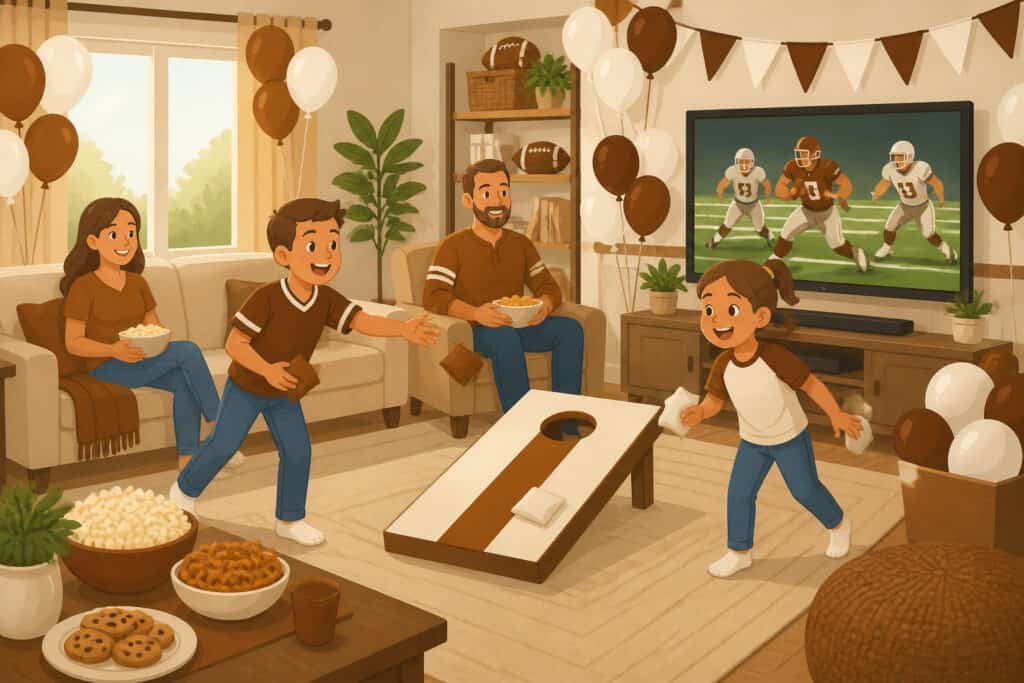
Confession: sometimes we skip the ‘perfect’ AI images and just can’t resist picking the most awkward ones. Hopefully they bring a smile to your face too!
Also try: Discovering Games: A Parent’s Playbook
Short bursts of play build coordination, help mood regulation, and improve sleep. Plus, you get two minutes of peace while they pretend the floor is lava. Win-win.
- This guide covers quick warm-ups, indoor and outdoor fitness games for kids, age tweaks, and safety tips.
- You’ll get step-by-step game rules, useful variations, and a friendly weekly plan parents can actually do.
- There are ideas for tiny spaces, rainy days, and ultra-energetic kids (you know the type).
Quick warm-ups: 5-minute routines that don’t feel like exercise
Start every session with a playful warm-up. This lowers injury risk and primes kids for focused play. Keep it short and silly so they don’t bolt.
- Animal Parade: 30 seconds each of bear crawl, frog jumps, and crab walks.
- Simon Says Stretch: Add toe touches, star jumps, and arm circles.
- Lazy Lightning Round: Run in place for 20–30 seconds, then shake out like a wet dog.
Top indoor fitness games for kids
Rainy day? Nap time delayed? These indoor fitness games for kids keep energy up and furniture unharmed—mostly.
1) Treasure Hunt Obstacle Course
Set up a simple course using pillows (stepping stones), a broomstick (balance beam substitute), and chairs (tunnel). Hide small toys or stickers as ‘treasures’ at checkpoints.
- How to play: Time each child as they complete the course. Encourage them to beat their own time.
- Variations: Add a math or spelling challenge at each checkpoint to combine brain and body.
- Age tweaks: Toddlers get fewer obstacles; older kids add a three-legged race segment.
2) Freeze Dance Fitness
A classic with an exercise twist. When music stops, kids freeze in a fitness pose: plank, tree pose, or squat.
- How to play: Play upbeat music and pause randomly. Whoever moves does a fun penalty like 10 jumping jacks.
- Benefits: Improves balance and listening skills while sneaking in strength moves.
- Variation: Make a ‘pose deck’ with cards showing different poses to keep it fresh.
3) Balloon Keep-Up Relay
All you need is a balloon. Kids must keep it off the ground using specific body parts or team passes.
- How to play: Split into teams. Each pass must use elbows or knees only. Drop and tag—your team restarts.
- Safety tip: Use lightweight balloons to avoid accidental eye pokes.
- Variation: Add number goals (keep the balloon up for 30 touches).
Outdoor favorites that burn energy fast
If you have a yard, park, or even a sidewalk, outdoor fitness games for kids are the fastest route to exhausted-but-happy littles.
1) Nature Bingo Sprint
Create bingo cards with things to find: red leaf, round stone, bird, dandelion. Kids sprint to find items and mark their cards.
- How to play: First to complete a line does a victory lap; everyone does sun salutations to cool down.
- Learning bonus: Great for observational skills and getting fresh air.
- Variation: Use photos for pre-readers.
2) Capture the Flag with Fitness Stations
Classic capture the flag gets better when you add fitness stations at bases—10 squats before you can steal the flag, anyone?
- How to play: Each player must complete the station exercise before tagging the base.
- Benefits: Mixes strategy with cardio and strength.
- Safety: Clear boundaries and rules for no-contact tagging.
Game rules, scoring, and fair play tips
Rules keep chaos from becoming an episode of parental regret. Keep them simple, explicit, and lighthearted.
- Explain rules clearly before starting and do a quick demo run.
- Use positive reinforcement: reward effort and creativity, not just speed.
- Rotate roles so shy kids can be ‘referees’ or ‘timekeepers’.
Age-friendly modifications
Fitness games for kids should adapt to age and ability. What’s challenging for a six-year-old can be impossible for a three-year-old—and boring for a ten-year-old.
Toddlers (1–3)
Focus on basic gross motor skills: walking, balancing, and hopping. Short 5–7 minute sessions work best.
Preschoolers (4–6)
Introduce simple rules, cooperative games, and slightly longer play blocks—10–15 minutes. Use colorful markers and timers.
School-age (7–12)
They can handle strategy, scoring, and endurance. Consider interval-style games with short rests and challenges that increase over time.
Gear, space, and safety checklist
You don’t need fancy equipment. A timer, a ball, a balloon, a few cones (or socks rolled into balls) and some imagination go a long way.
- Check the play area for hazards: sharp edges, slippery floors, and breakables.
- Use age-appropriate equipment and supervise closely for younger kids.
- Encourage hydration breaks and sunscreen outdoors.
Keeping kids engaged: tricks that actually work
If you want consistent family activity, make it social and slightly competitive, but not soul-crushingly serious.
- Short wins: 10–15 minute games are easier to commit to than hour-long ‘sports sessions’.
- Let kids invent rules sometimes—ownership increases buy-in.
- Rotate games weekly so novelty replaces nagging.
Mix fitness games for kids with chores (sock toss into hamper = basketball practice) and family routines. Little habits add up to big benefits.
Sample weekly plan: realistic and repeatable
This is not a training camp. It’s a friendly nudge to get kids active five days a week for 15–20 minutes. Swap days as needed.
- Monday (Indoor): Treasure Hunt Obstacle Course + balloon cool-down.
- Tuesday (Outdoor): Nature Bingo Sprint and 10-minute family walk.
- Wednesday (Indoor): Freeze Dance Fitness + strength pose relay.
- Thursday (Outdoor): Capture the Flag with fitness stations.
- Friday (Choice): Kids pick their favorite game from the week.
Troubleshooting common problems
If one child always wins, try scoring by improvement rather than speed. If motivation dips, add a tiny reward like choosing dinner music.
- Boredom: Shorten the game and increase novelty with new props.
- Injuries: Pause, care for the child, and modify future games to remove the risky move.
- Non-participation: Offer a co-referee role or let them be the playlist DJ.
Final thoughts: make movement the family default
Fitness games for kids don’t need to be perfect. They need to be consistent, fun, and doable by real families who also have dishes to wash and emails to send.
Start small, keep the rules simple, and let the kids lead sometimes. You’ll get more than exercise: better focus, improved sleep, and yes, some peace at bedtime.
FAQs
What are easy fitness games for kids at home?
Simple at-home options include Freeze Dance Fitness, Balloon Keep-Up, and short obstacle courses using pillows and chairs. Keep sessions 10–15 minutes and focus on variety rather than intensity.
How often should kids do fitness games each week?
Aim for daily short sessions or 5 days a week of 15–30 minutes. Mix active play with family walks to build routine without making it feel like a workout schedule.
How can I adapt fitness games for kids with different ages or abilities?
Modify tasks by simplifying movements for younger children (shorter courses, fewer obstacles) and adding challenges for older kids (timed laps, extra reps). Offer non-physical roles like timekeeper or referee to include everyone.
Are fitness games for kids safe indoors?
Yes, with precautions: clear breakables, use soft props, supervise closely, and set simple rules about safe contact. Prefer low-impact activities on slippery floors and keep sessions short.